

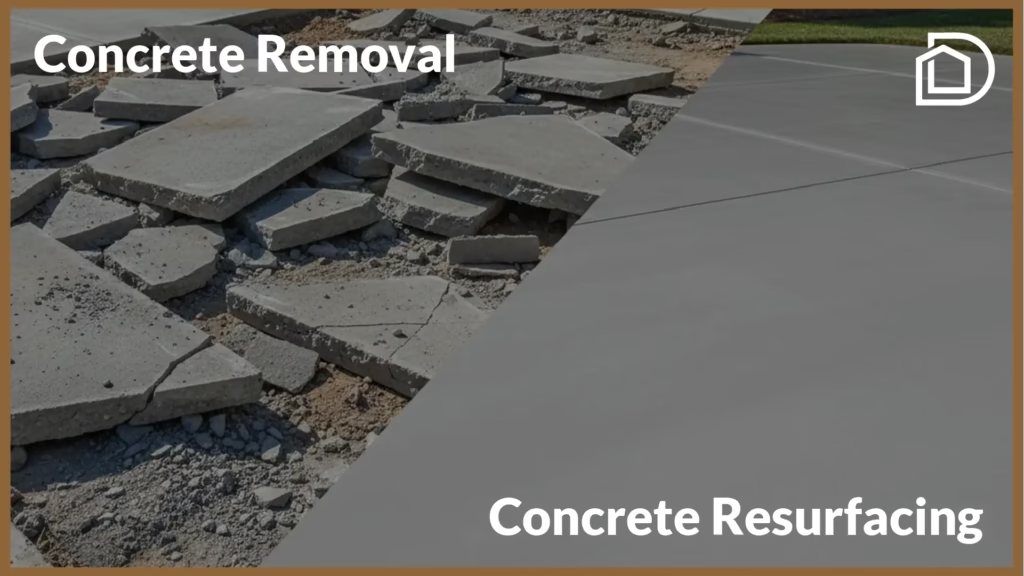
The best way to determine whether concrete removal and replacement is better than resurfacing depends on the depth of the damage and what caused it. If your slab is severely cracked, sinking, or falling apart, you’ll need a concrete removal contractor to break it out and replace it from the ground up.
But if it is merely worn, stained or lightly chipped, resurfacing may provide a fresh, clean, durable surface at far less expense than replacement. In this article, we’ll tell you exactly how to determine the difference, what each method consists of, and how homeowners can select an affordable long-term solution for their home in Charlotte.
What is concrete resurfacing, and when is it the best choice?
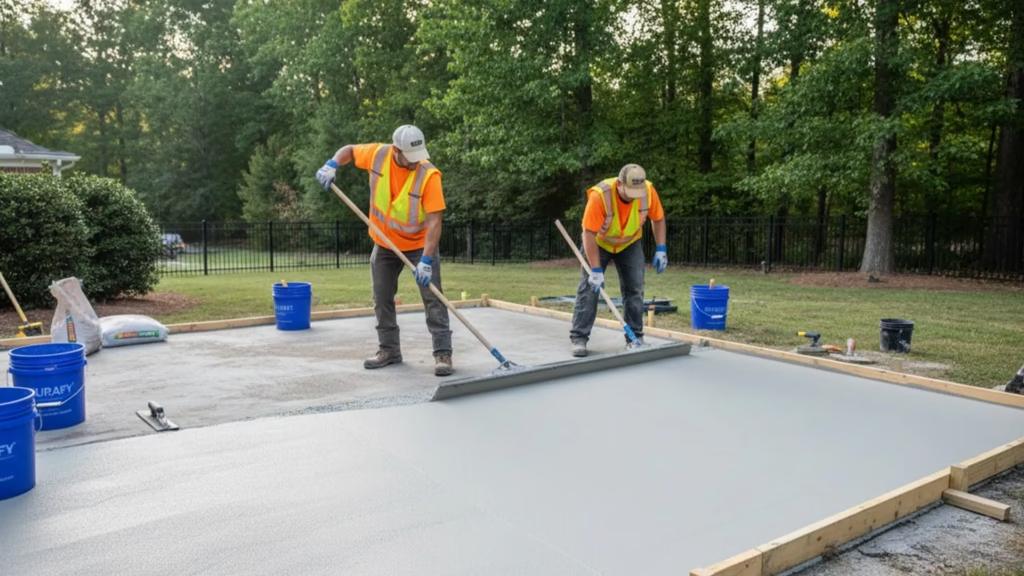
Concrete resurfacing involves applying a thin, polymer-modified overlay over an existing slab without having to remove the old material. The overlay bonds tightly to existing concrete and is designed to ride over minor imperfections in the slab surface, such as small cracks or spalling.
Homeowners will typically opt for resurfacing when the concrete base is still in good condition, which means there is no deep cracking, settling or subgrade failure. If you can stomp around on your slab and not notice mushy spots or movement, resurfacing could be a smart, long-lasting choice. According to the Portland Cement Association (PCA), polymer-modified overlays can extend a surface’s life by 10–15 years when installed under proper moisture and temperature conditions
The savings can be substantial for homeowners in Charlotte. A contractor specializing in the removal of concrete may charge two or three times as much for complete replacement as for resurfacing, depending on access to the site and disposal cost. The other major advantage to resurfacing is that it creates far less construction waste – an important factor when you take into account that according to EPA data, concrete debris represents almost 67% of the total construction waste in the US.
What are the key benefits of concrete resurfacing?
Aspect | Details |
Efficiency and Functionality | Resurfacing of the concrete provides an instant lift aesthetically and functionally, whilst maintaining your existing sub-base. Since there’s no heavy demolition, most projects finish in only a couple of days — a big advantage over full replacement. |
Design and Sustainability | Resurfacing from a design perspective, decorative overlays, stamped concrete textures and custom color finishes can be applied to older surfaces to bring back that new look. It’s also more eco-friendly — giving off fewer emissions and keeping thousands of usable tons of concrete out of landfills. |
Overall Value | Taken as a whole, resurfacing provides an even blend of appearance and preservation (the latter coming courtesy of increased tensile and compressive strengths), making it a far more practical alternative when you don’t want to consider getting in touch with a concrete removal company for a complete replacement. It is the right call when the foundation of your concrete is in good shape, but you just want to give it a new look. |
What is concrete removal, and when is it the best choice?
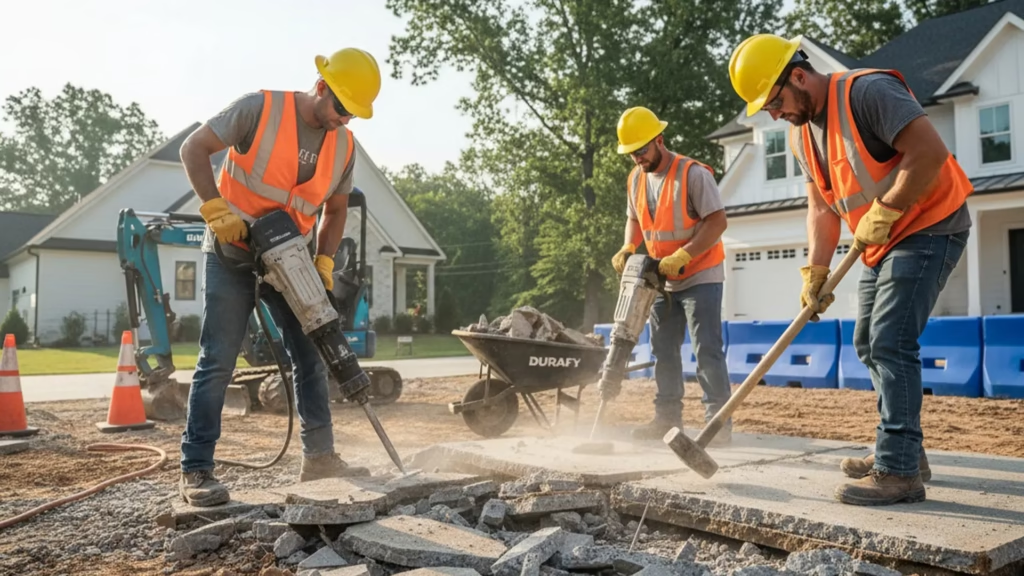
Concrete removal is what it sounds like: taking an existing slab out and starting from scratch — the solution for when concrete has gone bad. Resurfacing only renews the surface, but full removal allows a concrete removal contractor to repair or replace the base material, address drainage concerns, and pour new concrete that complies with today’s strength and mix specs. The outcome is a more durable surface that withstands loads better and weathers the elements, as well as enhancing curb appeal.
A standard project begins with a detailed inspection of the slab and subgrade. A concrete contractor looks for indicators like deep cracks, uneven settling or heaving — signs that the concrete has dropped so far it’s no longer supported. Once the debris is cleared, the subgrade is re-graded and compacted to remove voids or weak spots. According to the Federal Highway Administration (FHWA), proper base preparation is one of the most important steps to prevent future structural failures.
On a local level, Durafy’s team often advises total demolition of slabs with cracks wider than a quarter-inch, pieces that have settled at least half an inch or splices that failed to last more than a year.
Charlotte is built on soils with a clay base, and can shift after downpours of heavy rain, causing uneven subgrade pressure (which resurfacing cannot fix). Replacing or demolishing the structure altogether in such cases, will not only secure the structural stability of what is left if it, but will also safeguard other structures which may be associated with the structure (i.e. driveways, foundations and drainage.)
Comparing Concrete Resurfacing and Removal: Cost, Durability & Impact
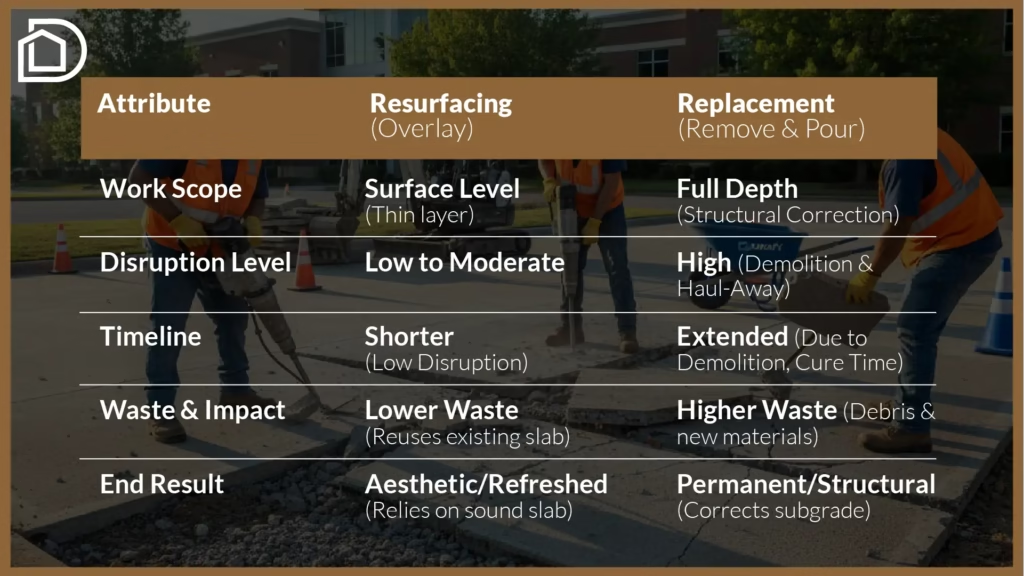
Resurfacing and replacement differ across cost per square foot, expected lifespan, homeowner disruption, and environmental impact; choosing the right approach requires balancing these attributes against project goals. Resurfacing typically delivers lower upfront cost and shorter timelines but offers a shorter lifespan when underlying issues exist, while replacement has higher initial cost and more disruption but often yields decades-long performance when properly executed.
Approach | Typical Cost per sq ft (Charlotte) | Expected Lifespan | Disruption Level | Environmental Impact |
Resurfacing | $3–$10 | 5–15 years with proper prep | Low to moderate | Lower waste; reuses slab |
Replacement (remove & pour) | $6–$15+ | 25+ years when subgrade corrected | High (demolition & haul-away) | Higher waste & materials impact |
Partial replacement with repairs | $8–$12 | 15–25 years depending on repairs | Moderate | Moderate waste; targeted removal |
This comparison shows resurfacing is cost-efficient for sound slabs, while replacement is an investment in permanence and structural correction.
Why choose Durafy for concrete removal and resurfacing services in Charlotte, NC?
When the surface of your concrete begins cracking, staining, or settling, you need more than just a quick patch—you want the job done right from start to finish. This is where Durafy, a Charlotte, NC owned and operated concrete removal company, makes the difference.
Durafy provides a closer, genuine local offering with end-to-end service. Each project begins with a site visit to assess whether resurfacing or full removal would provide the best long-term value. Everything is done in-house, from demolition and debris hauling to subgrade repair, forming, pouring and finishing, so homeowners and businesses don’t have to deal with several vendors or unclear timelines.
According to the Concrete Pavement Preservation Guide, the key to long-lasting concrete performance lies in proper preparation, mix design, and curing—not just the finish on top. That’s exactly the standard Durafy follows: ensuring subbase correction and moisture control on every pour. In addition, Durafy’s process aligns with EPA guidelines for reusing or recycling removed concrete, diverting material from landfills and helping reduce Charlotte’s overall construction waste.
Durafy Advantage | What It Means for Property Owners |
Local Focus | Our Charlotte-based crew understands local clay soil conditions, regional weather patterns, and building code specifications — ensuring each project is built to last under North Carolina’s unique environment. |
Full Range of Concrete Solutions | Whether you need aggregate prep, regrading, or complete installation of driveways, patios, walkways, or slabs — Durafy manages every phase with precision and the right equipment. |
Transparent Process | Project starts with a detailed estimate outlining scope, cost, and timeline. |
Eco-Friendly Practices | We follow EPA-approved disposal and concrete recycling practices to minimize environmental impact and keep Charlotte cleaner and greener. |
Craftsmanship Warranty | Our work is backed by a local warranty program and careful craftsmanship that ensures structural dependability and a polished finish that endures. |