

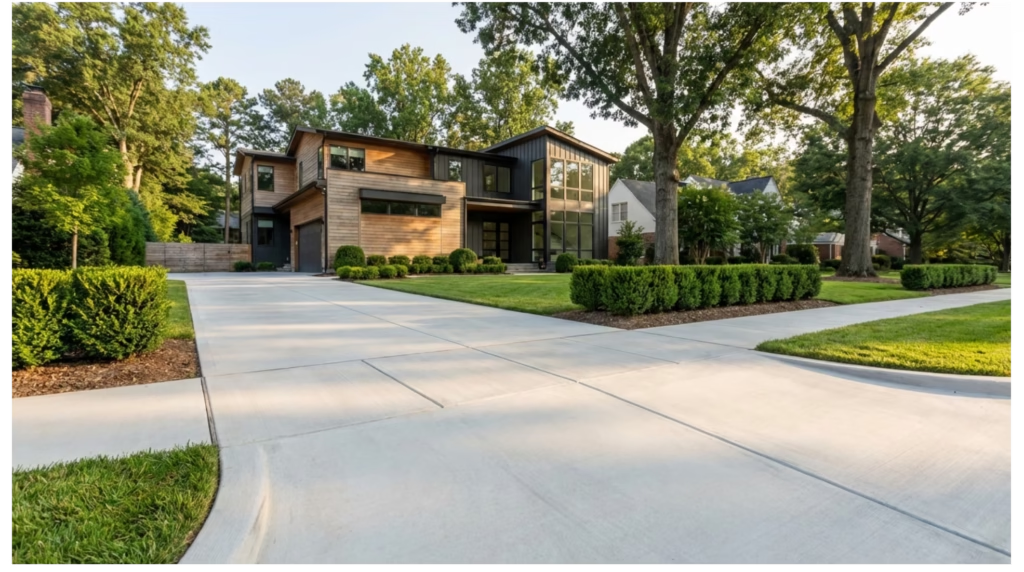
Finding a reliable residential concrete contractor in Charlotte is the first step toward increasing your home’s curb appeal and structural integrity. Whether you are looking to install a custom stamped concrete patio, repair a worn driveway, or lay a rock-solid foundation, professional masonry services are essential for the North Carolina climate.
Our guide explores the top-tier concrete services in Charlotte, NC, from eco-friendly building practices to cost-effective installations. Discover how local expertise can transform your outdoor living spaces with durable, high-quality concrete solutions tailored for Queen City homeowners.
Essential residential concrete cervices in Charlotte, NC
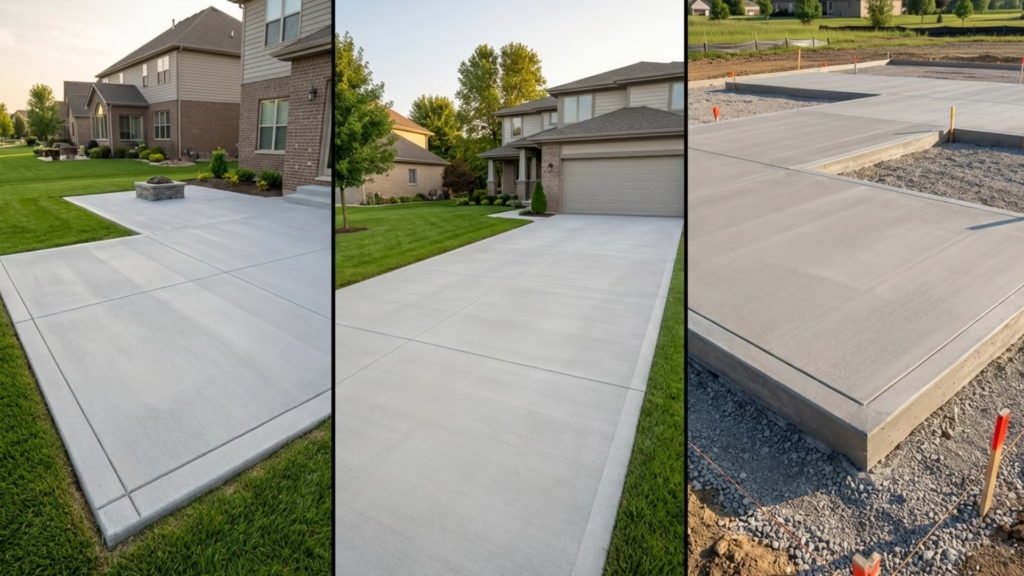
Custom concrete patio installation for outdoor living
In 2026, the “basic backyard” is dead. Charlotte homeowners are now treating their patios as true outdoor living rooms. Because of our mild Carolina winters, a well-designed patio is usable nearly 10 months a year.
We’re seeing a massive shift toward biophilic design—where we integrate your concrete hardscape with native landscaping to reduce heat buildup. Instead of just a gray slab, think large-format textured concrete that mimics high-end pavers but won’t let weeds poke through.
Pro-Tip for the QC: If you’re near the Catawba River or in low-lying areas of Mecklenburg County, ask about permeable concrete. It’s the “green” way to handle our heavy summer downpours by letting water soak straight through the slab, keeping your yard from turning into a swamp.
Professional concrete driveway services
Your driveway is the first impression a visitor has of your house. Your driveway serves as the entrance to the house, and it can be defined as the “handshake” of the home. However, the climate in Charlotte can present a challenge for driveways to remain in good condition because of the extreme temperatures (the hottest July day being 95°F) and winter days where ice storms can occur. If the driveway was not poured correctly, it is more likely to be damaged by spalling and cracking.
In order to provide customers with a guaranteed driveway installation in the 704 area (Charlotte), contractors need to provide:
- Stronger edges: The edges need to be THICKER to support the weight of a loading truck and/or SUVs to prevent crumbling over time.
- Climate smart sealing: Sealing the driveway after it is poured is necessary to protect the new driveway from the sun’s harmful UV rays, and winter salts.
- Border aesthetic: A trending aesthetic appearance for driveways in 2026 is an untextured broom finish driveway with either a stamped border or aggregate border; this can be achieved without the cost of completely stamped poured driveways.
Concrete slab foundations for structural integrity
Let’s be honest about it: foundations aren’t the sexiest part of the house; however, they are also the most vital part of the house. In Charlotte, we deal with expansive clay soil. If your slab has not been properly “beefed up”, then your doors will stick and your drywall will crack from the clay going through shrinkage & swelling due to receiving rain.
When we pour a foundation in Charlotte, we will strictly follow the Mecklenburg County Code Enforcement; this means:
- Vapor barriers: Essential for the protection of NC humidity from penetrating up through your floors.
- Proper cure: During the heat of the summer, concrete will dry too quickly and lose its strength. Therefore, we always use professional curing compounds to ensure the slab reaches its full 2500-3000 PSI rating.
- Reinforcement: We don’t skimp on rebar. With the price of steel stabilizing in 2026, there’s no excuse not to have a grid that keeps your foundation “rock solid” for the next 50 years.
Stamped concrete: aesthetics and value
If you want your home to stand out in a neighborhood like Dilworth or Ballantyne, plain gray concrete isn’t going to cut it. In 2026, Charlotte homeowners are treating their outdoor surfaces like high-end interior flooring. According to Durafy (2026), decorative concrete has become the go-to solution for those wanting a “custom look” without the maintenance headaches of real wood or the massive price tag of natural stone.
Trends in stamped and stained concrete (2025-2026)
The look of stamped concrete has changed. In the past you saw very shiny or fake-looking plastic finishes. Today’s look in the Queen City is filled with natural textures.
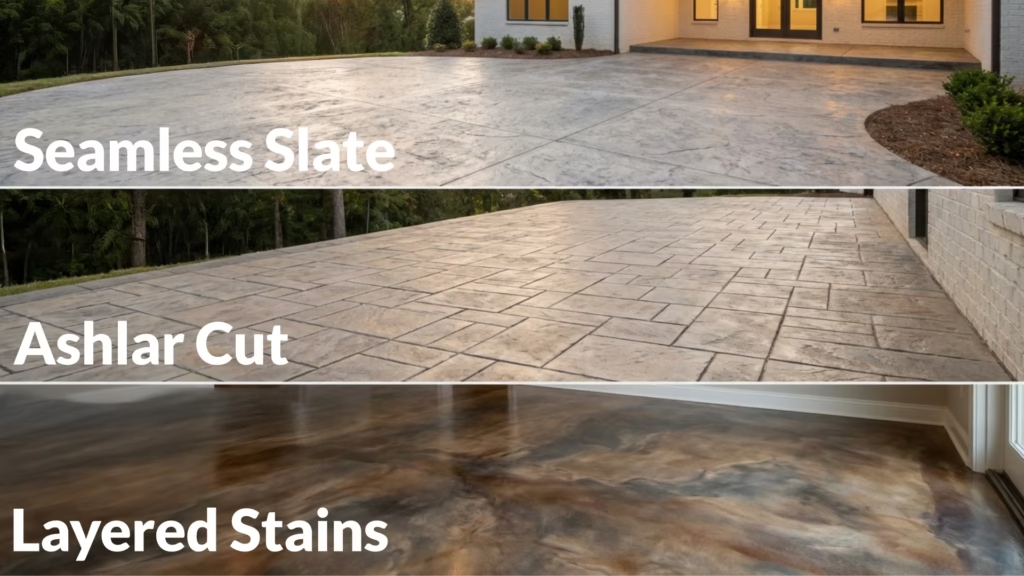
- Seamless Slate & Roman Slate: Right now these are both extremely popular because they have no deep grout lines which means they can be cleaned quickly using a power washer following the annual pollen season post-spring in NC.
- Ashlar Cut: The Ashlar Cut design still ranks very high amongst the choices for patios in Charlotte. It looks like real stone that has been hand laid and will have an immediate positive impact on the curb appeal of any home.
- Layered Stains: Professional concrete contractors are using multi-toned reactive stains as opposed to one solid colour, which creates a marbled finish mimicking the high-end Italian slate products while coordinating well with the brickwork typical of classic homes in Charlotte.
Textured and Eco-Friendly Decorative Options
We can’t talk about Charlotte concrete without talking about the heat. A dark, solid slab in August is basically a frying pan for your feet. That’s why textured and eco-friendly options are the smartest move for 2026.
- Cool-Touch Texturing: We’re seeing a rise in “sand-finish” or “exposed aggregate” textures. These provide excellent slip resistance around pools and actually stay cooler under the Carolina sun than smooth, dark-stained surfaces.
- Low VOC Sealers: Modern stamped concrete projects are now focused on using low VOC (Volatile Organic Compounds) sealers as their main source of protection against UV rays and oil spillage. These sealers will keep your concrete protected indefinitely, while protecting your yard from any harmful chemicals to your soil or local groundwater.
- Natural Pigments: Many contractors are now using iron oxide-based pigments in their designs. Iron oxide pigments are made from natural material to guarantee that your patio will not turn an ugly pink color after being exposed to three years of NC sunshine.
Maintenance and concrete repair services in Charlotte

Let’s face it: The ideal Charlotte weather—cool enough not to sweat, yet still warm enough to comfortably wear a t-shirt—is actually a fantasy when it comes to your driveway. Between the hot and humid summers and the crazy “freeze-thaw” climate cycle we endure every winter, your concrete driveway is going through major changes all the time. If you start to notice minor cracks in the surface of your patio or spider webs in your decorative concrete, don’t panic; most of these issues can be repaired before they require expensive repairs.
As the team at Dry Pro suggests, if you allow these small cracks to go unaddressed, you’re essentially placing your bet on roulette; catching that damage early will keep more money in your pocket and prevent the red clay from eroding and causing damage beneath your slab.
Common repair techniques for patios and driveways
There are many professionals who can help homeowners restore their concrete’s functionality and look without having to completely tear it down. What method is used will depend on how badly damaged the concrete is, as well as how much damage has been done to the soil that’s supporting it.
- Precision Crack Filling & Sealing
To protect against water penetration in hairline cracks and surface fissures, using high-quality, pliable sealants is your best bet. The Concrete Network (2026) emphasizes that for cracks wider than 1/4 inch, a “backer rod” or specialized undercutting technique—widening the base of the crack into an inverted V-shape—is required to ensure the filler material creates a strong mechanical bond and does not pop out due to heavy vehicle traffic. - Concrete Leveling & Slab Jacking
Settled driveways and patios create trip hazards and poor drainage when the surface is uneven. To lift settled concrete there are two primary methods to accomplish the task:
a. Polyurethane Foam Injection Technology (Polyjacking): A modern technique of raising sunken concrete using airlift to install polyurethane foam injection creates the most efficiency for North Carolina soil conditions.
Polyurethane foam is injected into void spaces through small drilled holes to fill voids and lift slabs with little disturbance to surrounding landscape materials according to Airlift Concrete Experts, the foam material is lightweight, waterproof and cures quickly.
b. Mudjacking: A traditional method of lifting sunken concrete involves a mudjacking operation that utilizes heavy cement slurry material. While Mr. Level states that mudjacking will raise and level settled concrete, it will add substantial weight to the soil beneath; therefore, the results may not be successful on all types of residential foundations in Charlotte.
Budgeting for your concrete project: Costs and Permits
| Project Type | Average Cost (Per Sq. Ft.) | Estimated Total Cost (Typical Size) |
| Standard Concrete Slab | $6 – $12 | $5,400 – $10,800 (30’x30′ slab) |
| Concrete Driveway | $6 – $14 | $2,400 – $13,000 (400-800 sq. ft.) |
| Concrete Patio | $4 – $12 | $1,000 – $6,000 (10’x20′ to 20’x20′) |
| Stamped/Decorative | $10 – $28 | $1,500 – $9,300+ (Based on design) |
Permits and Regulations in Charlotte, NC
Failure to secure the proper permits can result in fines, work stoppages, or issues when selling your home. In Charlotte, the requirements depend on the scope of the project.
- Residential Driveways: Modifications or new driveways accessing city-maintained streets require review by the Charlotte Department of Transportation (CDOT). Residents can contact the Charlotte Development Center for application details (City of Charlotte, 2026).
- State Roads: If your driveway connects to a North Carolina Department of Transportation (NCDOT) road, a separate permit application must be submitted to the local NCDOT District Engineer’s office, which can take four to eight weeks for approval (NCDOT, 2026).
- Foundations and Structural Work: Major structural changes or new foundations require specific building permits through Mecklenburg County to ensure compliance with residential safety codes.