

In Charlotte, NC springtime is one of the best times to enjoy your outdoor living spaces but before you pull the patio furniture out and light the grill, you need to prepare the concrete patio for the coming fun.
After enduring a winter-long cycle of freeze/thaw, excess moisture penetration, and collecting pollen all off the concrete, it can show signs of deterioration, no matter how well the concrete has been installed. If you are hoping to achieve the desired look of your outdoor patio by doing it yourself, or if you would prefer to hire a professional concrete contractor to complete the project, this guide provides step-by-step details on what you will need to do to prepare your patio for a new season.
Why spring concrete prep matters in Charlotte
Charlotte lies within the humid subtropical climate classification. Winters bring mild temperatures but have several freezing days, ice storms, and large amounts of rain; all of which are detrimental to the surface of concrete. According to NOAA, Charlotte averages between 5-15 days of freezing temperatures per year. While this is a low number, if repeated freeze-thaw cycles occur, the water entrapped in the surface pores expands upon freezing, creating micro-cracks. Once thawed or during the next freeze-cycle these cracks get larger until eventually resulting in substantial damage in your concrete patio.
Charlotte-Mecklenburg Storm Water Services has said that the improper drainage of patios are one of the leading causes of concrete deterioration in this area. Spring is the best time to repair/replace a concrete patio area prior to the extreme summer heat/humidity.
Signs of winter damage to watch for
Before you begin any prep work, do a thorough visual inspection of your patio. Key warning signs include:
- Hairline or larger cracks running across the surface
- Spalling — where the surface layer chips or flakes off
- Discoloration or staining from winter salt, algae, or moss
- Uneven or sunken sections of the slab
- Standing water in areas that previously drained properly
If you notice several of these issues, it is worth consulting a concrete patio contractor in Charlotte before proceeding with DIY repairs that might mask deeper structural problems.
Step-by-Step: How to Prep Your Concrete Patio for Spring

Step 1: Thoroughly clean your patio surface
First, do a complete clean of anything that is on your patio. This would include any furniture, any planters and rugs. Use a stiff-bristled broom to get the dirt off and then use either a pressure washer with 1,500 to 3,000 PSI to fully remove any debris. To remove any stains or biological growths (i.e. algae, mold, etc.), you can use a concrete-safe degreaser or diluted bleach (1 part bleach to 3 parts water) to remove them.
According to The American Concrete Institute (ACI), you should clean your concrete surfaces each year to help prevent the build-up of contaminants and they will help accelerate the degradation of your concrete surface. Any contamination that is allowed to sit on this surface allows moisture to become trapped against the slab and will accelerate the rate of deterioration.
Step 2: Look for cracks and damage on the surface
Once your outdoor concrete patio is clean and dry, kneel down and look at the entire surface carefully for cracks or any other type of damage. Once you have found some cracks, mark them with chalk or painter’s tape. Be especially careful around the edge of the patio slab and also in areas that are near downspouts or garden beds because these areas are high in moisture.
According to the Portland Cement Association, any cracks that are smaller than 1/4 inch wide are most of the time cosmetic and you are able to repair them with a do-it-yourself filler.
Step 3: Fill and repair cracks
For minor cracks, a polyurethane or epoxy crack filler is your best option. These products flex with the concrete during temperature changes, reducing the likelihood of the crack reopening. Here is the basic process:
- Clean the crack thoroughly with a wire brush and blow out any dust.
- Apply crack filler according to the manufacturer’s instructions, slightly overfilling.
- Allow to cure fully — typically 24 to 48 hours depending on temperature.
- Sand or grind the filler flush with the surrounding surface.
Avoid using basic concrete caulk for outdoor repairs. Charlotte’s summer heat and humidity can cause it to shrink and pull away from the edges within one season.
Step 4: Use concrete sealers
Using a concrete sealer on your concrete patio is one of the best ways to prolong the life of your patio. A good-quality concrete sealer creates a protective layer on your concrete that protects it from moisture, UV rays, oil stains as well as the damaging effects that can occur from freeze-thaw cycles. In the Charlotte area, penetrating sealers (based on siloxane or silane) are recommended because they allow your concrete surface to breathe, but also provide water resistance.
The Concrete Network, recommends that the average residence reseal their outdoor concrete approximately every two to three years as part of a standard maintenance program. If your concrete surface no longer has water beads forming on it, it’s time to reseal your patio.
Also at Durafy, we recommend that it is best to apply the concrete sealer on a dry day when the temperature is between fifty degrees Fahrenheit and ninety degrees Fahrenheit. This time-frame for application is common during the spring months here in Charlotte. Use either a roller or a pump sprayer to apply the concrete sealer in small sections. This will help to minimize the appearance of lap marks.
Step 5: Confirm drainage and slope
Having proper drainage is essential for the long-term durability of concrete. In order for water to flow off of your patio, the ground has to slope a minimum of one eighth of an inch per foot away from your house foundation. After the surface of your patio has had time to dry, make use of both a level and a measuring tape to check that this slope exists.
Charlotte-Mecklenburg Storm Water Services suggest that homeowners establish a proper drainage path away from homes and into permeable landscape zones or storm water drains when developing their patio. Water pooling near your house foundation isn’t just a problem for the concrete; it also has the potential to create major structural issues for your house.
Stage 6: Fix up your patio furniture and accessories
When to call a concrete patio contractor in Charlotte
DIY vs. Professional Repair: How to Decide
While many spring prep tasks are well within reach for a motivated homeowner, some situations call for a licensed concrete patio contractor. Consider calling a professional when:
- Cracks are wider than 1/4 inch or appear to be growing
- Sections of the slab have sunk more than 1/2 inch
- You notice crumbling or deep spalling that exposes aggregate
- Water pools on the patio or runs toward the house foundation
- You want to resurface or apply a decorative coating across the entire slab
Attempting to patch over serious structural damage without professional assessment often leads to costlier repairs down the road. A reputable Charlotte concrete patio contractor will provide an honest evaluation and lay out your options clearly.
Updating your patio this spring: Decorative concrete
Concrete slab replacement
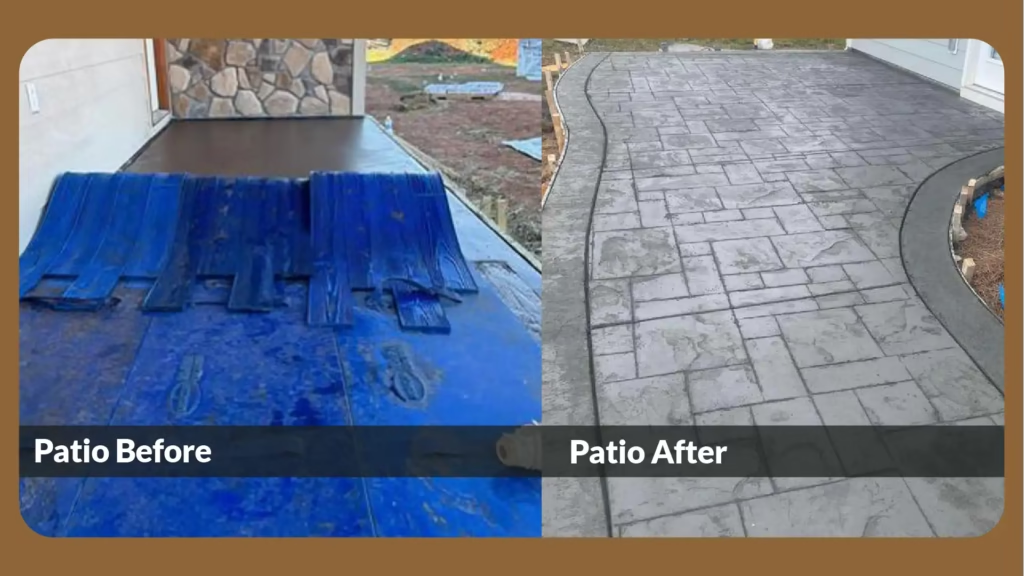
You might consider replacing your concrete slab—instead of completely taking out the slab and pouring a new one—if the existing slab is sound, but looks old and/or worn out; if it’s just a matter of changing the appearance of the patio. The cost is significantly less than doing a full replacement, and the disruption will be minimal for the homeowner.
Some of the most popular choices among Charlotte residents when completing an overlay on their concrete patio are stamped concrete versions of different materials, including flagstone, slate, cobblestone, or wood planks. A concrete contractor in Charlotte will usually finish most patio overlay projects in 2 to 3 days.
Concrete floor coatings
Epoxy and polyurea coatings have been increasingly popular as another way to enhance patios, especially those areas that would serve as exterior entertaining spaces. There is now a large selection of colors and finishes available; they also add a non-slip texture to the surface; and they typically can be installed in one weekend from start to finish. In addition to being much more aesthetically pleasing than bare concrete floors, they are also much easier to maintain and clean.
Adding to your patio
FAQ'S
The best way to clean a concrete patio after winter in Charlotte is to start with a thorough sweep, followed by pressure washing between 1,500–3,000 PSI. For stubborn stains like algae or mildew caused by the humid climate, use a concrete-safe cleaner or a diluted bleach solution to restore the surface before making repairs to your existing concrete slab. According to the American Concrete Institute, regular cleaning helps prevent long-term surface deterioration