

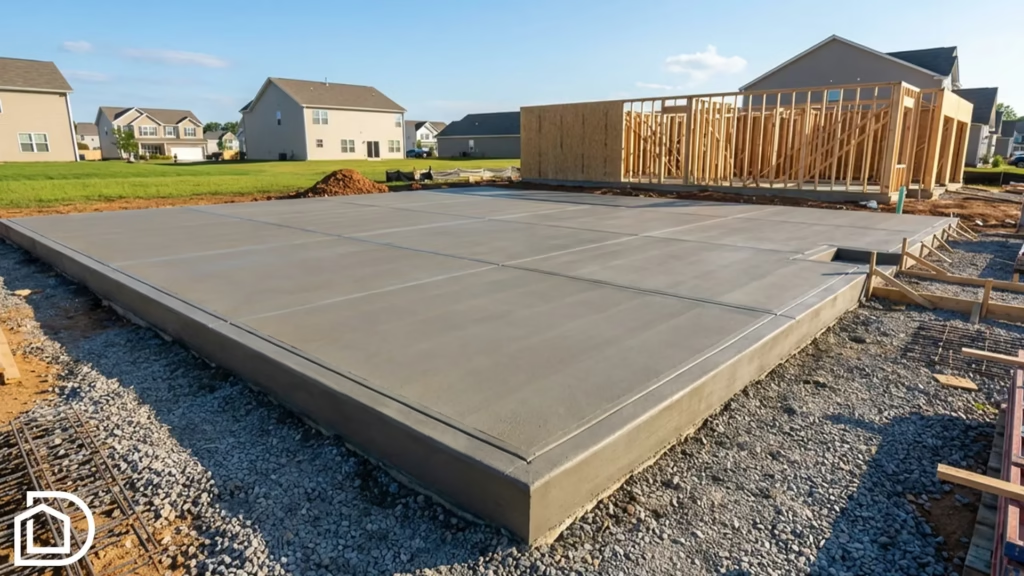
Types of concrete slabs and foundations
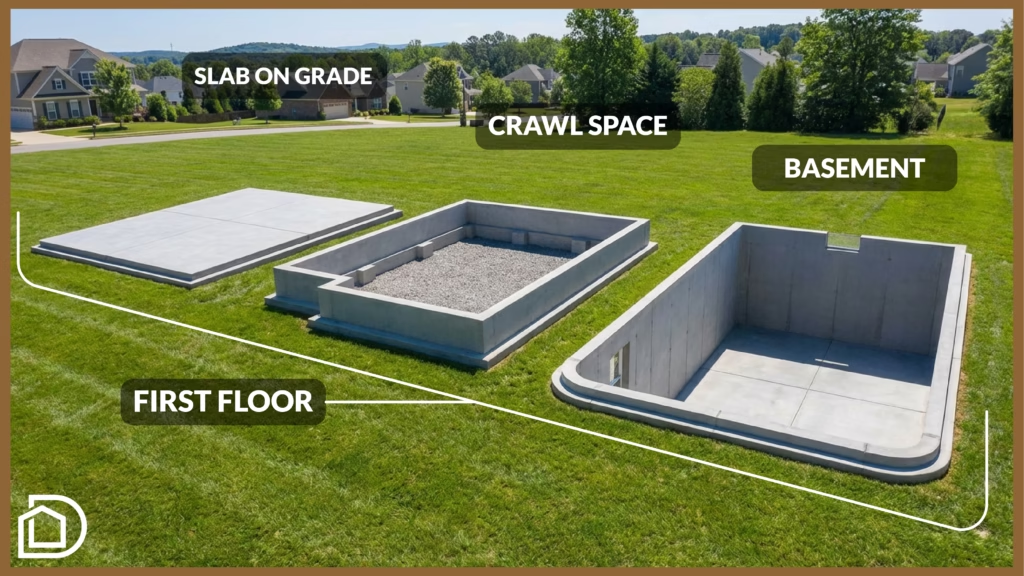
The concrete slab is the flat, solid base your entire structure sits on. They distribute the weight of your home or building over compressed soil to keep the structure level and prevent settling.
Our clay soils in this part of Charlotte expand when wet and contract when dry, so you have to choose and construct the slab carefully. The Department of Transportation states that Charlotte soils are prone to this “shrink-swell” behaviour, giving the slab selection increased importance for how well it will perform over time.
The following is a simple explanation of the most popular slab types in Charlotte for homeowners and property managers to make an informed decision quickly.
- Slab-on-grade
A go-to for a level lot with good drainage. Reasonably priced, so it makes an excellent choice for homes, garages and small commercial pads.
- T-shaped foundation
Constructed with a thick edge around the outside. Helpful for when the soil shifts more or if you’re looking for extra moisture protection and settling defence.
- Raft or waffle slab
Thicker and grid-lined. Great for warehouses, factories and anywhere else where the soil needs some support, handling all that weight.
- Suspended slab
Constructed above ground whenever you require space below for wiring, furnaces or basements or above for extra floors. Completely engineered according to the configuration of the building.
These four options will meet most commercial and residential needs in Charlotte, and which one is best typically depends on soil conditions, drainage, and how much weight the structure must hold.
Type of Slab | Application | Thickness / PSI (max) |
Slab-on-grade | Driveways, garages, patios | 4–6 in, 3,000–4,000 PSI |
T-shaped | Homes needing a perimeter footing | 6–12 in footings and slab edge, 3,000–4,000 PSI |
Raft / waffle | Warehouses, industrial floors | 8–18 in with ribbing, 4,000–5,000 PSI |
Suspended slab | Multi-story buildings | Engineered; varies by PSI and reinforcement |
Why are concrete foundations so important for structural integrity?
The foundation is what keeps the building level, dry and in one piece. It lifts all of the weight off it from above and funnels it securely into solid ground. When a foundation is designed properly, it takes into account soil strength, groundwater, drainage and the loads that are anticipated on the building. Miss any of that, and the slab can crack, tilt or settle unevenly.
As noted in Advances in Structural Integrity and Failure (2024, p.3), properly designed foundations ensure even support throughout the structure, greatly minimizing long-term stress and failure to structures.
Reinforcement, like rebar or wire mesh, prevents the slab from pulling apart and vapor barriers keep ground moisture from seeping into the building. We know at Durafy that two of the most important contributors to reduce cracking and long-term settlement in your average concrete pour are proper reinforcement and moisture control.
Spending a bit more up front on soil testing and the right reinforcement almost always pays off here in Charlotte. With our clay soils and wet-dry cycles, that extra care helps your foundation last for decades instead of turning into a costly repair project later on
Requirements and benefits of commercial concrete slabs in Charlotte
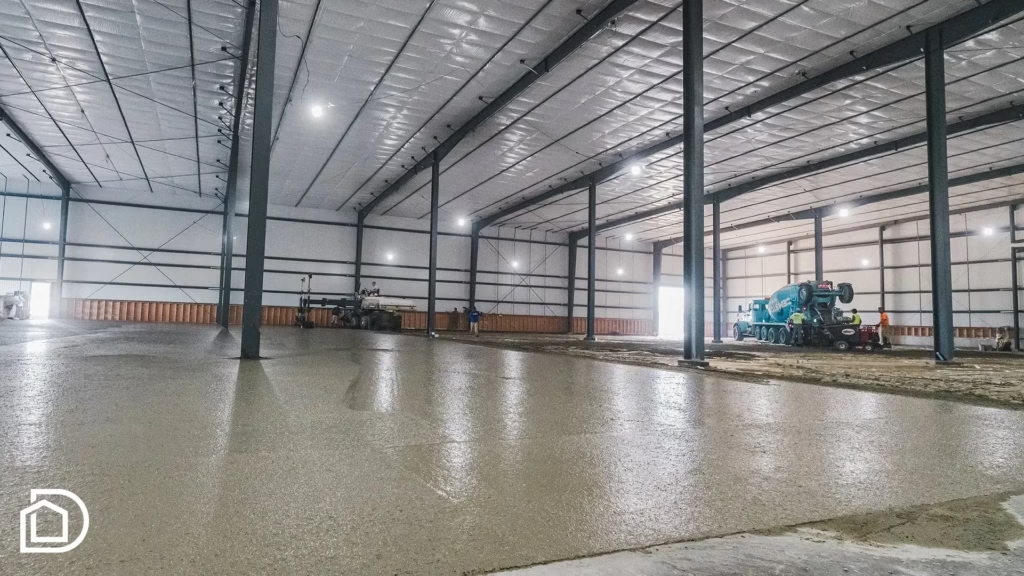
Commercial concrete slabs in Charlotte need to go above and beyond what you’d expect from a normal residential pour because they support heavier equipment, consistent foot traffic, and must follow local building codes, ADA access rules, and safety standards. Any experienced concrete foundation contractor will tell you that commercial work typically calls for thicker slabs, more engineered reinforcement or post-tensioning, and a stronger concrete mix that can handle forklifts, storage racks, or high-traffic retail activity. These slabs also require much stricter flatness and levelness tolerances so machinery can operate safely and efficiently day after day.
For businesses, the payoff comes over time. A quality commercial slab doesn’t just “hold the building up” – it will minimize downtime, lower ongoing repair costs, and ensure your daily operations run smoothly. Citing a report by Buildings , when commercial establishments choose higher-performance concrete systems, they spend less over the lifecycle on repair and maintenance, waste less money in terms of lost time/refurbishment and cover their initial investment for basic-grade construction much quicker.
What is the process of installing a concrete slab?
It is easier to grasp how to install a concrete slab if you break it down into basic steps. Each step leads to the next so that in the end, the slab is strong, level and durable.
Consultation & Planning (1–2 weeks)
Your contractor tests the soil, assesses what you’ll be doing on the slab and designs accordingly. It’s here that thickness, reinforcement, drainage requirements and PSI strength are established.
Site Prep & Base Work (1 – 3 days)
The surface of the area is dug, levelled and compacted. A stable substructure eliminates the risk of sinking well into the future. A vapour barrier is included if it is desired to prevent ground moisture.
Forming & Reinforcement (1–2 days)
Forms outline the slab’s shape. Rebar or wire mesh is put in place to mitigate cracking and bear the weight of the slab. In many cases, there is an inspection here.
Casting & Finishing (1 day per course)
Concrete is poured, spread out, levelled and finished according to its look and use (broom, smooth or troweled). Natural shrinkage is controlled with the inclusion of control joints.
Curing & Protection (7–28 days)
Concrete gains strength slowly. The slab should be kept moist and protected from loads for several days while it reaches the desired PSI. This step is important for durability over time.
What are the signs of concrete slab foundation damage?
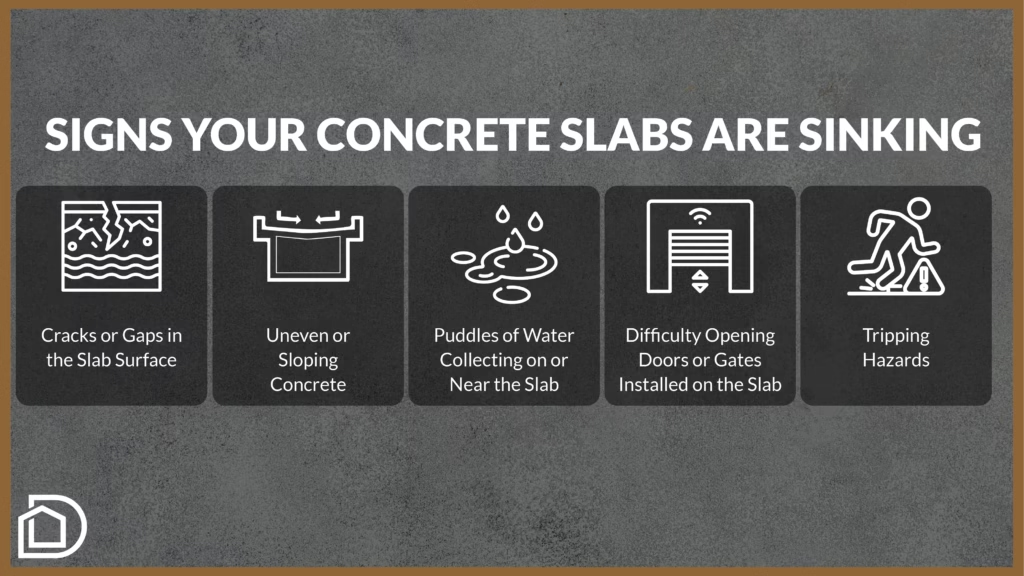
When a slab starts having problems, it usually shows visible signs. Here’s what to look for:
- Cracks are wider than hairlines. These may signal movement, settlement, or shrinkage issues.
- Uneven or sloped floors Often a sign the soil underneath has shifted.
- Moisture stains or white powder (efflorescence) Indicates water intrusion or poor drainage.
- Doors or windows sticking Can show that part of the slab is moving.
- Gaps between walls and floors. Another red flag for settlement.
Understanding the pattern of damage helps determine whether the issue is cosmetic or structural.