

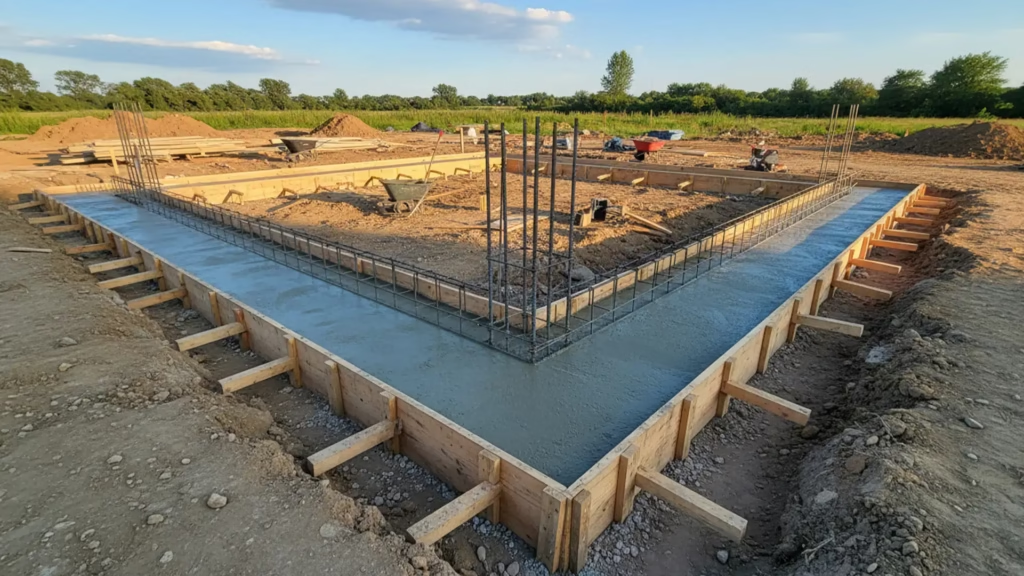
If you ever ponder what ties a building’s components together, it’s the footers. These vital components are planned and poured by a concrete footer contractor that understands how to equally distribute the structural weight into the ground effectively, to ensure it won’t experience cracking, uneven settling or long-term expensive ineffective damage.
Concrete footings (that’s our terminology, not theirs) are the intermediaries between the weight-bearing portions of a building and the earth beneath them, completing the journey for bulk loads (like those from foundations to tops of walls) and dead loads (say for embedded kitchen islands) as they travel into prepared subgrade within both residential and commercial buildings. Properly installed with the right digging equipment, bar-tie reformatting and adherence to code-based requirements are what structures all buildings no matter how severe the soil or environment.
What Are Concrete Footings and Why Are They Essential?
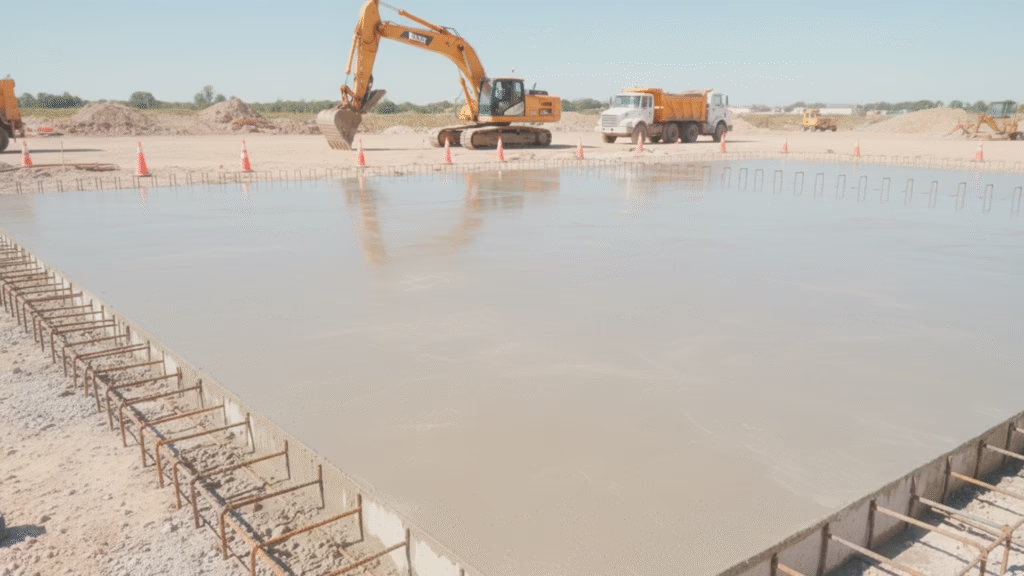
A concrete footing – otherwise termed as a footer- is a wide portion of the foundation that is installed below the structure’s piers and foundation walls to distribute the weight of the building or house from walls into the area’s soil for stability. Its primary purpose is to spread the loads of the building evenly and take away load-bearing stress from certain parts of the ground that would actually move if there were no slab. At its core, footings provide a stable foundation for everything sitting atop them — walls, slabs and framing.
Professional concrete contractors design and install concrete footers to strict engineering criteria. For instance, a standard residential footing is about 16-24 inches wide and placed 12 to 48 inches underneath the frostline, but for commercial use, either pad or raft footings that are reinforced will be used to support heavier loads.
Placement must be done correctly and evenly reinforced, with adequate attention paid to the curing process: small errors or shortcuts will result in uneven settling or long-term structural shift.
Besides load distribution, the foundations are also involved in soil-structure interaction. They need to be beneath the frost line (typically 12–18 inches in North Carolina) or they will risk becoming a victim of frost heave, which happens as moisture in the soil freezes and expands, thereby forcing the footing upward. Contractors also take steps to control the risk with drainage systems or by insulating around the foundation with rigid foam to stabilize temperatures and moisture levels.
For example, if there is a retaining wall or pool deck with an insufficient footing width and depth, it could settle or crack following heavy rain because the soil gets soft. By comparison, a properly designed footer, with correct rebar location and soil compaction, will remain in line after years of wear, protecting the value of your investment as well as keeping you compliant with local building codes.
According to the American Concrete Institute (ACI 332), residential footings must be designed to handle soil bearing capacities as low as 1,500 psf for clay soils, while ACI 318 specifies minimum reinforcement to control cracking. The International Residential Code (IRC R403) also mandates continuous footings under load-bearing walls, ensuring safe, uniform support. These standards are the main part of best practices every reliable contractor follows.
What Are the Main Types of Concrete Footings?
Not all footings serve the same purpose in keeping a building stable. An experienced concrete foundation contractor will consider the bearing strength of the ground, the height of the water level, and construction load demands to select the most suitable footing system. Footings generally are grouped into two categories — shallow foundations and deep foundations — that can be used to accommodate a variety of soil and load conditions.
In areas such as North Carolina, with prevalent red clay and mixed sand-clay soils, the design of footings should consider expansive soil action and freezing-thawing. Many foundation contractors deal with that by having footings go to just below the frost line (12–18 inches), and then make sure there’s good drainage to minimize heave during winter-time moisture swings.
Reinforced raft or pile systems are generally used by commercial foundation contractors for larger projects, such as commercial and industrial, as they can help offset the irregular subgrade support and/or lateral migration resulting from heavy rain.
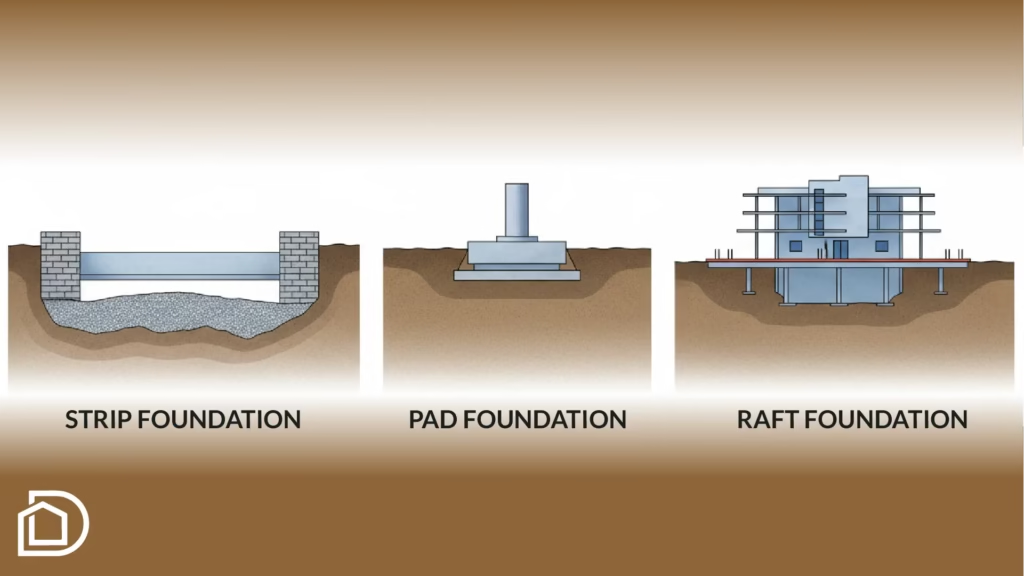
Shallow Footings: Strip, Pad, and Raft Foundations
- Strip Footings: Strip Footings: Run under load-bearing walls to keep your home or building level and crack-free — perfect for most North Carolina soils.
- Pad Footings: Support single columns or heavy spots like porches and garages, spreading weight where it’s needed most.
- Raft (Mat) Foundations: A single thick concrete slab that supports the whole structure — ideal for softer or uneven ground.
Common Footing Types and Applications
| Footing Type | Best Use / Soil Type | Typical Depth / Notes | Pros & Cons |
| Strip Footing | Continuous walls on stable, near-surface soils | Shallow (to frost depth) | Cost-effective, easy to form; not ideal for point or heavy loads |
| Pad Footing | Isolated columns, light commercial structures, or mechanical bases | Shallow to moderate depth | Simple and fast to construct; may require thicker pads for high loads |
| Raft (Mat) Foundation | Weak or variable soils under large or multi-story buildings | Shallow to moderate, covers full building footprint | Reduces settlement; uses more concrete and rebar; higher initial cost |
| Pile Foundation | Deep soft soils, coastal zones, or high-load applications | Driven or bored to reach firm strata | Bypasses weak layers; specialized equipment; higher cost |
| Pier Foundation | Point loads, decks, retrofits, or underpinning repairs | Moderate to deep (drilled/augered) | Excellent for restricted access; adaptable for repairs; requires precision alignment |
Choosing the Right Footing System
Every site comes with its own combination of cost, buildability and efficiency. Shallow systems are most affordable and quick to install, but require suitable soil for drainage to be even partly effective; while deep systems cost more but perform well over time in much poorer subgrade.
An adequately reinforced strip footing or a pad footing will be more than adequate for most concrete slab homes and light commercial, providing decades of service — as long as they’ve been built by experienced foundation contractors near you who understand local conditions and applicable building codes.
Whether it’s an addition to your home or a new commercial build, hiring trusted concrete foundation contractors means the correct type of footing will be chosen and reinforced effectively to withstand North Carolina soil shift and seasonal weather conditions.
How Are Concrete Footings Designed for Residential and Commercial Structures?
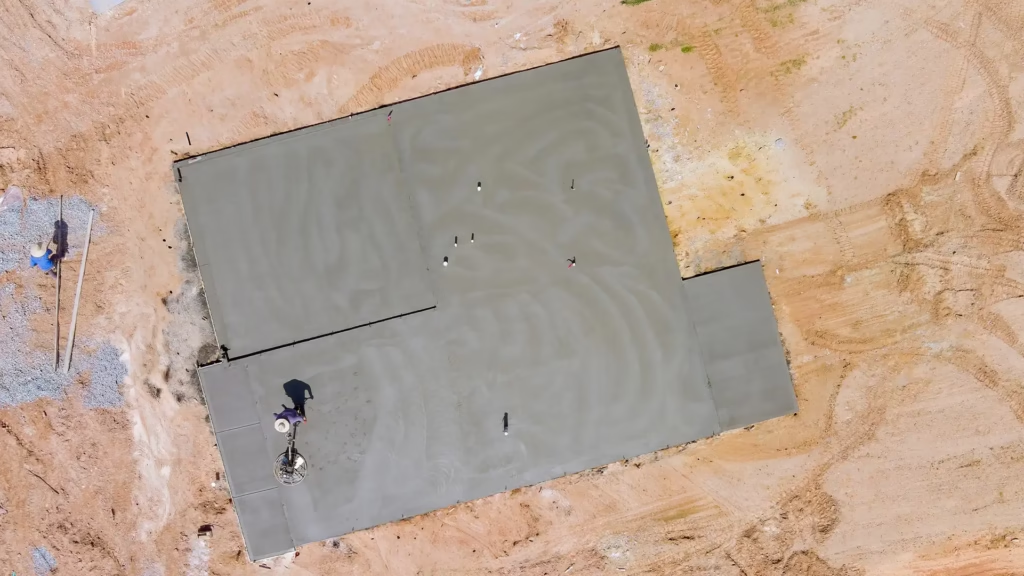
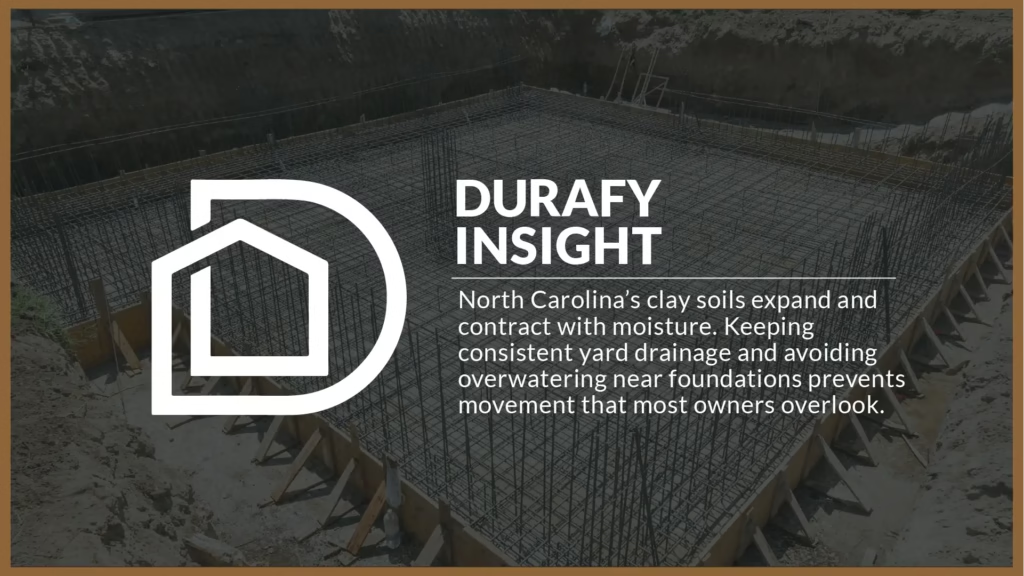
Designing a concrete footing is more than just pouring concrete into a trench — it’s a precise balance between soil mechanics, structural loads, and code compliance. In North Carolina, where clay soils expand and contract with moisture, footing design must address both bearing capacity and movement control to ensure long-term stability.
A qualified concrete foundation contractor works closely with a geotechnical engineer to determine how deep, wide, and reinforced each footing must be. In areas like Charlotte or Raleigh, frost depth is relatively shallow (around 12–18 inches), but moisture variation is high — a contrast to colder northern states, where frost protection often dictates footing depth.
In short, while northern regions are designed to prevent frost heave, North Carolina is designed to manage soil shrink-swell and drainage. That’s a big regional distinction that influences every footing dimension and reinforcement choice.
Key Design Factors That Shape a Footing
Design Factor | Typical Unit / Measure | How It Impacts Footing Design |
Soil Bearing Capacity | psf (pounds per square foot) | Higher capacity allows smaller footings; lower capacity needs wider bases to spread loads. |
Vertical & Lateral Loads | kips (1 kip = 1,000 lbs) | Heavier loads require thicker and stronger footings with more rebar. |
Frost Depth | inches | In NC, footings typically go below 12–18 inches; deeper in colder states to prevent frost heave. |
Reinforcement (Rebar) | bar size and spacing | Controls cracking, improves tensile strength, and ties footings to walls or slabs. |
Concrete Strength | psi (pounds per square inch) | Commonly 3,000–4,000 psi for residential, up to 5,000 psi+ for commercial structures. |
Drainage & Moisture Control | slope %, gravel base | Essential in NC’s clay soils to prevent water pressure and settlement issues. |
Durafy Pro Tip
Do not size footings based on “rule of thumb”. “Soil conditions locally can change greatly — even within the same lot in North Carolina. Always verify the soil bearing a strength with an easy geotechnical test before you fix on the size of footings.
How are concrete footings built in North Carolina?
Building strong, code-compliant footings in North Carolina means precision, inspection, and awareness of the state’s unique soils and climate.
- Excavation & Formwork
- Mark and dig trenches to the required width and depth per plans.
- Expect clay-rich or moist soils, especially in the Piedmont and Coastal Plains — stabilize or add drainage gravel as needed.
- Compact and clean the base; install rigid, level forms that can resist concrete
Durafy Pro Tip: Add a 4-inch gravel layer under the footing for better drainage and moisture control — this simple step dramatically boosts long-term stability.
- Rebar Placement & Inspection
- Install reinforcing bars (#4 rebar is typical) tied and spaced per structural drawings.
- Use spacers or chairs to maintain 3-inch clearance from the
- Add dowels where walls or slabs will connect for continuous load
- Have an inspector confirm placement, spacing, and cover before pouring.
Durafy Pro Tip: Never skip inspection — poor bar support can weaken the footing by up to 20%, even if the concrete tests strong.
- Concrete Placement & Curing
- Pour continuously and consolidate with vibration to remove air pockets.
- Keep surface disturbance minimal for uniform strength.
- Cure for at least 3–7 days (28 days for full strength) using wet coverings or curing compounds.
Durafy Pro Tip: In summer, pour early or use cooling admixtures; in winter, use insulating blankets to maintain hydration above 50°F.
- Final Inspection & Backfill
- Remove forms after the concrete sets; inspect for cracks, alignment, and elevation accuracy.
- Repair honeycombing immediately before backfill.
- Backfill in compacted layers to protect the footing and prevent settlement.
Footing Maintenance and Long-Term Care in North Carolina
Concrete footings are made to last, but even the mightiest of structures wear down over time. Routine inspections and maintenance guarantee compliance but also defend your investment against expensive repairs later. North Carolina’s wide variety of soils and climate — it has everything from the humid Coastal Plain to the frost-prone Appalachians region — demands a more local touch than many other states have. Here’s how to make sure your footings are strong for decades.
Key Inspections That Guarantee Footing Quality
A proper inspection schedule includes three stages:
- Before the pour: Confirm layout, rebar spacing, compaction, and form stability.
- During placement: Verify mix consistency and consolidation.
- After curing: Test concrete strength and review curing records.
Inspectors will reference your project’s geotechnical report and building plans to verify compliance. Following a pre-pour checklist—like confirming elevations, bracing, and drainage—helps pass inspections the first time and minimizes rework.
Durafy Insight: Contractors who maintain detailed inspection logs see fewer callbacks and warranty claims. Documentation is your best insurance against future disputes.
Common Footing Problems and How to Prevent Them
Even when properly installed, footings can be problematic over time.
- Sagging or tilt: Usually the result of soft (or poorly compacted) ground. Routine geotechnical testing and proper drainage can help prevent it.
- Cracks: Usually from shrinkage or inadequately covered rebar. Small cracks can be patched with epoxy, though larger ones may call for partial replacement.
- Water intrusion: A big problem in the Carolinas’ humid Getting the grading right, adding French drains and ensuring there is no crack for water to enter can all reduce the threat.
Durafy Pro Tip: When building new construction for properties in climates with moisture change, look into soil moisture barriers. They’re relatively inexpensive, but can save thousands in the long run.
Maintenance Tips for Homeowners and Property Managers
Simple, seasonal routines go a long way in protecting your structure’s foundation.
- Inspect cracks: Photograph them every few months to monitor changes.
- Check drainage: Make sure water flows away from the foundation.
- Clean gutters: Overflow can erode soil near the footing.
- Control vegetation: Keep large tree roots at least 10 feet away from concrete edges.
How to Design Concrete Footings for Residential & Commercial Buildings
Residential footings tend to be shallower and handle lighter loads, such as single-family homes or smaller buildings. Commercial footings have a deeper foundation, they are reinforced and made for heavy or unforcible loads. Both are built to handle the North Carolina soil as well as its weather.