

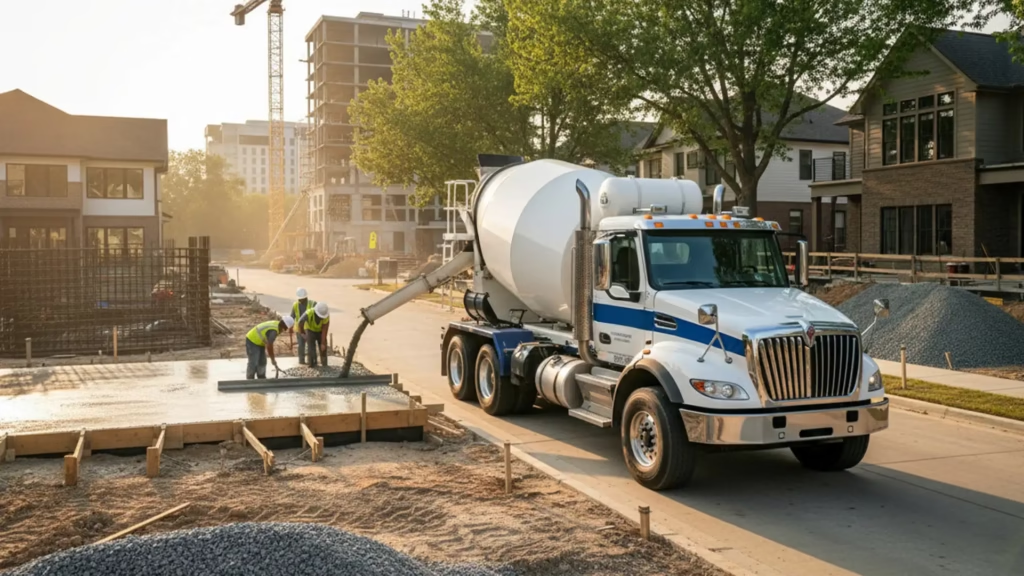
Are you searching for the best Charlotte, NC residential and commercial concrete contractor? This guide will answer your most pressing questions on cost, durability and the local installation process.
Property owners in Charlotte want weather-resistant concrete that complies with city code and provide the greatest long-term value. We break down the specific work you need in the Queen City (driveways, patios, parking lots, foundations), how to receive a complementary estimate that won’t cut corners on thoroughness and an indispensable checklist when it comes time to begin scrutinizing professional, code-compliant contractors.
Keep reading to find out, including clear timelines, comparisons between materials and what you can expect during your next Charlotte concrete project.
Why You Need a Charlotte Concrete Specialist, Not a Handyman
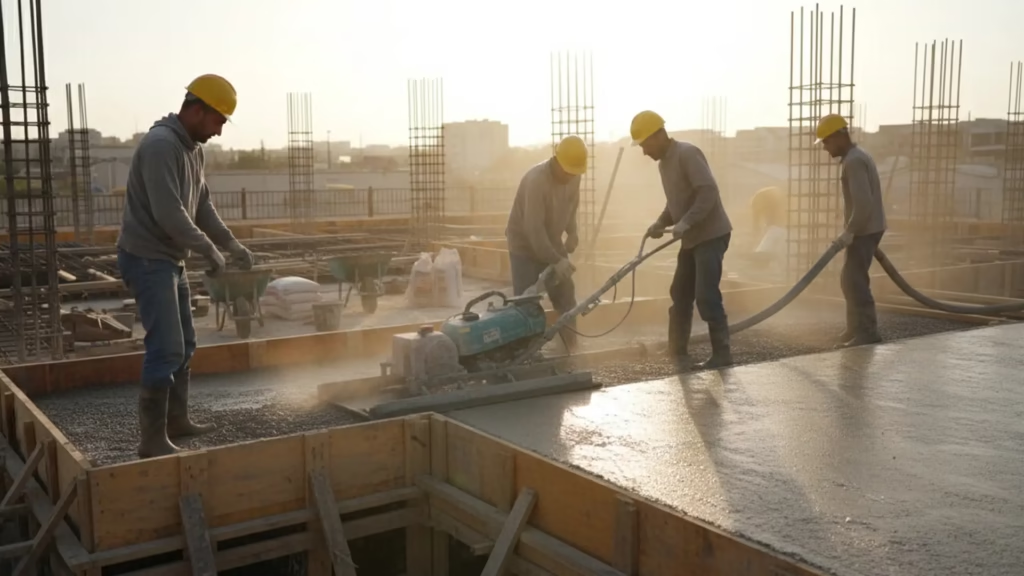
When it’s time to fix up your driveway or parking lot, that cheap offer from a roadside crew might end up costing you more than you thought after they’re gone. Here in Charlotte, we’re dealing with some seriously tough soil for this setup, and that constant freeze-thaw cycle from December to February is no joke. Getting a solid base that’s spot on is totally crucial
A top-notch concrete pro, whether they’re big-time or just your neighborhood hero, isn’t just pouring out some concrete. What they’re selling is peace of mind and technical expertise to ensure your project can withstand the local climate, pass a city inspection, and never be abandoned midway.
Below the Low Bid: The Checklist for Evaluating Charlotte Contractors
If you’re comparing quotes, look past the final number and scrutinize the actual plan. A great general contractor knows that durability isn’t luck; it’s a specific process that prevents costly problems later. This is where you separate the pros from the weekend warriors.
Here is the non-negotiable checklist we use to deliver real value and protect your budget:
- Proof of Compliance: Are they up-to-date on Charlotte’s specific permitting for driveways, foundation work, and, for commercial clients, ADA-compliant slopes? The right contractor manages the paperwork to prevent expensive city stop-work orders.
- The Reinforcement Plan: Are they just dropping some wire mesh, or do they specify the right rebar size and placement? Load-bearing areas, like a garage slab or a commercial loading dock, need a structural plan, not guesswork.
- Warranty & Insurance: Ask about their general contractor licensing, liability insurance, and the specific warranty on their You need a guarantee, not a promise.
Durafy Tip: Don’t be lured by a low-cost estimate that suggests simply pouring over the old asphalt or thin base. Long-term structural integrity always relies on robust subgrade prep.
Concrete vs. Pavers: What to choose?
A lot of Charlotte property owners argue over concrete vs pavers. Decorative pavers look great, especially in small patios or when creating patterns; poured concrete is the ideal choice for driveways and parking areas that need to endure long-term use.
Feature | Poured Concrete (Professional Installation) | Segmented Pavers (Stone/Brick) |
Durability & Cracking | Highly resistant to wear when reinforced and properly sealed. Cracks are possible but preventable with correct expansion joints. | Designed to flex with the soil. Individual pavers can shift, leading to tripping hazards or maintenance. |
Maintenance | Very low. Requires sealing every few years. Easy to pressure wash. | Higher. Prone to weeds, moss, and requires periodic sand replacement in the joints. |
Best for Budget | Lower initial cost for large areas like a long driveway or commercial parking lot. | Higher initial cost due to intensive labor for individual piece installation. |
Local Climate | According to FHWA when poured with the right air-entrainment mix, it easily withstands freeze-thaw cycles | Excellent drainage, but individual pieces can still shift due to saturation. |
Repairs | Can be patched, though repairs may be visible. Full slab replacement is a major expense. | Very easy to repair; just lift and replace the damaged paver. |
What Residential Concrete Services Are Available in Charlotte?
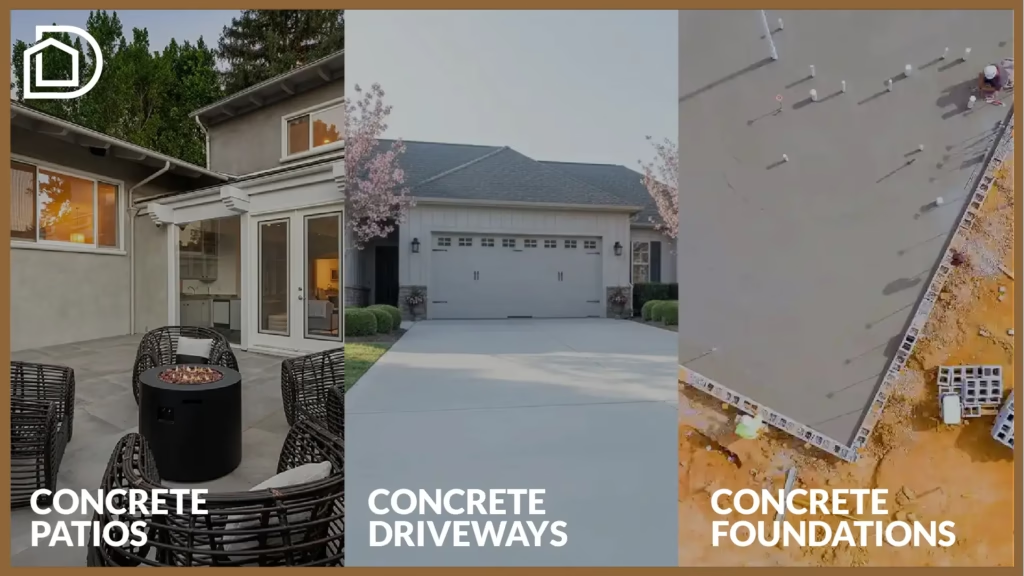
When it’s time for residential concrete work in Charlotte, homeowners from Ballantyne to Dilworth to University City typically require a combination of structural and aesthetic services— craftsmanship for new driveways as well as patio resurfacing or foundation repairs. Each service has its own technical specs, timelines and pricing components based on the soil types and city requirements.
1. Driveway Installation & Replacement
A Charlotte concrete driveway is more than just a flat surface to park your car and basketball hoop on— it’s a load-bearing structure that was designed to withstand decades of vehicle traffic and extreme seasonal changes.
Driveway slabs shall comply with the city of Charlotte Land Development Standards Manual concrete driveways should meet a minimum compressive strength of 3,600 PSI at 28 days, with proper subgrade compaction and 4–6 inches of slab thickness depending on use.
2. Patio Construction & Outdoor Slabs
In Charlotte’s humid subtropical weather, concrete patios are no strangers to temperature swings and moisture. A good contractor will incorporate expansion joints, adequate slope (¼ inch per foot) for drainage and optional decorative finishes such as stamped or stained concrete.
Patios in the South End or Plaza Midwood might be all about aesthetics—blending concrete seamlessly with an outdoor kitchen, pergola or fire pit. In addition, the NC Building Code recommends appropriate site grading and runoff control measures to prevent structural displacement from ue to water buildup.
3. Foundation & Structural Concrete
Whether it is a new addition in Huntersville or a garage slab in Myers Park, foundations all need the same adherence to the bearing capabilities of soil and controlling moisture. Improper drainage and soils high in clay content (as are many found in Mecklenburg County) can lead to settlement or cracking if not addressed properly.
Per the City of Charlotte Engineering Standards Manual, residential footings should extend at least 12 inches below undisturbed soil and meet local frost depth requirements.
Which Commercial Concrete Services Does Durafy Provide in Charlotte?
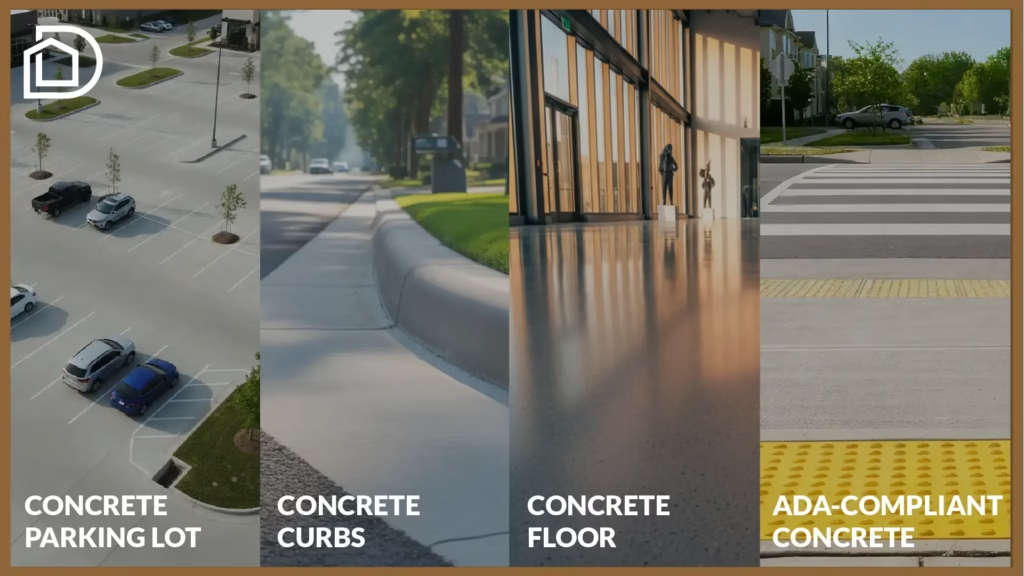
Commercial concrete work requires heavier-duty design, attention to load ratings, and compliance with accessibility and municipal standards to support business operations and liability management.
Typical offerings for commercial properties include parking lot construction and repair, concrete curbs and wheel stops, ADA-compliant ramps and accessible routes, and industrial or warehouse floor installations.
Commercial Service | Critical Attribute | Maintenance/Compliance Notes |
Parking Lots | Load rating & subbase performance | Requires engineered subbase, joints, drainage, and periodic sealing |
Curbs & Wheel Stops | Traffic control & protection | Positioning affects runoff and protection for landscaped islands |
ADA Solutions | Slope, landing, tactile warnings | Must meet accessible route criteria and local code checks |
1. Parking Lot Construction & Design
All commercial parking lots in Charlotte fall under city engineering guidelines for subgrade, slope and drainage.
The City of Charlotte Land Development Standards Manual requires that paved areas have a 2% cross-slope for drainage and good compaction of the base course suitable to carry commercial traffic loads.
2. ADA-Compliant Concrete Work
Under the 2010 ADA Standards for Accessible Design, sidewalks must have a maximum 2% cross slope and running slopes less than 5% without handrails. These guidelines are typically examined during site permitting in Charlotte by the Charlotte Engineering & Property Management Department to verify whether curb ramps, parking spaces and accessible routes comply with state and federal code.
3. Concrete Curbs & Gutters
Curbs serve both structural and drainage functions, channeling stormwater toward inlets and protecting pavement edges. The NCDOT Standard Specifications for Roads and Structures, Section 846, governs concrete curb and gutter design across North Carolina.
4. Asphalt Paving & Resurfacing
Asphalt remains a cost-effective solution for large commercial lots and roadways. The City of Charlotte Construction Standards Manual aligns with NCDOT Section 610, requiring base, binder, and surface courses to meet Superpave mix design standards and minimum 92% compaction density.
5. Industrial & Commercial Concrete Floors
Concrete floors are common fixtures in warehouses, manufacturing plants and retail spaces (including those located inside Mecklenburg County). The design and erection of these floors do fall within the scope of guidance from the American Concrete Institute (for example, ACI 302.1R) related to slab thickness, surface tolerances, jointing and load classifications.
How Does Durafy Provide Transparent and Stress-Free Project Quotes?
At Durafy, every quote begins with a detailed scope that covers work phases, materials, timeline and cost drivers—enabling you to compare proposals on an apples-to-apples basis.
We provide three levels of quoting service, one for each phase of the planning process:
- Free Basic Quote: Ideal for homeowners and property managers who are just starting their research. You’ll receive an overview of a range and timeline, so you can plan your budgeting accordingly.
- Custom Onsite Quote: This includes a site visit (normally within 48 hours), a full project overview and a written proposal that breaks your project down into labour, material and permit costs, as well as photos and design renderings of your project for clarity/assert clarity, plus the option to access finance options.
- High-End Render Quote: This option is centred around visual planning and delivers a 3D rendering for you to visualize the end result before any work occurs.
Every quote comes with Durafy’s commitment to honesty and client service at the forefront. And, You’ll always have the opportunity to ask for changes or clarifications before giving us the go-ahead, in order to make a decision based on both cost and long-term value.
What Should You Expect During Your Concrete Service Consultation?
Before the consultation, assemble access information, note visible issues like cracks or drainage problems, and identify finish preferences to speed the assessment and refine the proposal. During the site visit, expect measurements, soil and drainage observations, discussion of load expectations, and sample finishes to choose color and texture; contractors will also review permitting needs and timeline constraints.