

A parking lot is more than just a place to park cars. It’s a carefully engineered system designed to handle constant vehicle loads, meet accessibility standards, and withstand North Carolina’s changing weather. In Charlotte, a successful commercial or ADA-compliant parking lot design depends on three essentials: a strong foundation, proper ADA layout, and well-planned drainage.
Each layer, from the subgrade to the surface, plays a role in preventing cracks, puddles, and costly repairs. This guide explains how a commercial concrete contractor builds durable foundations, follow ADA regulations for accessible spaces and slopes, and create drainage systems that protect your pavement from water damage.
Whether you’re planning a new commercial lot or upgrading an existing one, you’ll find practical insights for long-lasting performance and compliance in the Charlotte area.
What Are the Essential Components of Parking Lot Foundations?
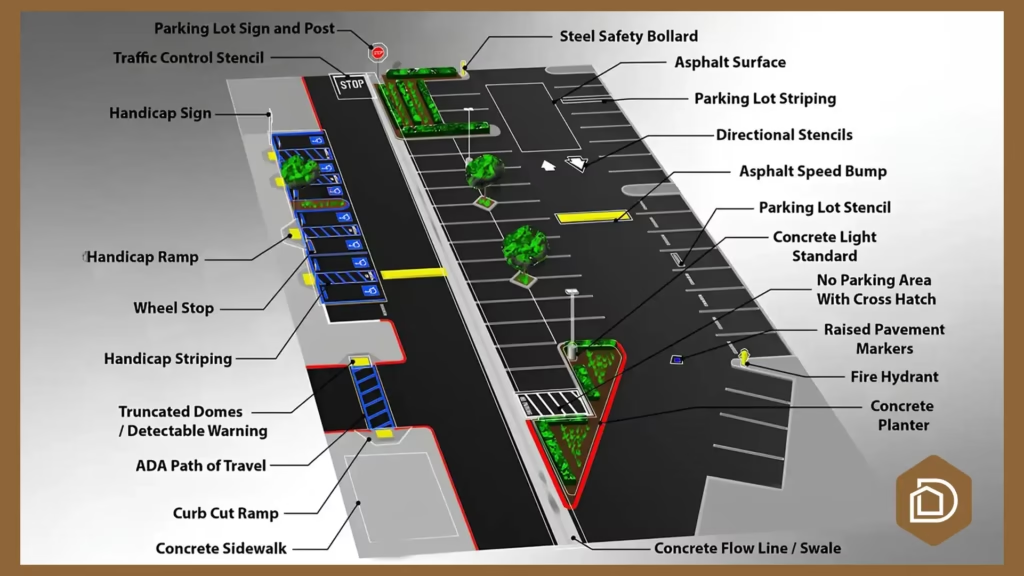
A parking lot foundation represents a multi-layer construction system designed to transfer vehicular loads into the local soil while providing a stable, drained platform for your pavement surface. According to Tensar, the subgrade acts as the foundation and must be treated and compacted; the sub-base sits above it and offers structural stiffness plus drainage; the base course underneath the surface distributes wheel loads broadly and evenly; and the surface layer (whether concrete or asphalt) resists wear and shear forces while protecting the layers beneath.
For practical design, you weigh material costs, the likely traffic loads, the local climate, and your intended maintenance strategy to choose appropriate materials and thicknesses. A well-prepared subgrade, appropriate selection of sub-base and base materials, compaction to target density, are the means by which settlement and cracking can be limited so that a durable parking surface can be realized.
Essential Foundation Components for Commercial Parking Lots in Charlotte, NC
- Subgrade: Charlotte’s Piedmont soils can hold moisture, so stabilization with lime or cement is often required. Compact to 95% of maximum dry density (ASTM D698) and grade for proper drainage.
- Sub-base: A 6–12-inch layer of crushed aggregate (ABC or #57 stone) improves stiffness and drainage. Use geotextile fabric on weaker soils to prevent mixing.
- Base course: The main load-bearing layer, usually a graded aggregate base (GAB), spreads vehicle loads. Heavy use may need thicker bases or soil stabilization.
- Surface layer: Most local projects use cement concrete for strength and ADA compliance or asphalt for flexibility and simpler maintenance.
- Drainage: Maintain at least 2% slope and add trench drains or catch basins to avoid ponding during Charlotte’s heavy summer storms.
How Is Site Preparation Done for Durable Parking Lot Foundations?
The first phase in site preparation is a geotechnical investigation of the potential bearing capacity, moisture content, and soil composition. During clearing, contractors are also removing bad soils and performing proof-rolling to identify soft areas that need undercutting or stabilization with lime, cement or geosynthetics. Good site prep will minimize future differential settlement and provide an accurate base of grading and compaction that we’ll discuss in a moment.
How Do Concrete and Asphalt Foundations Differ in Parking Lot Construction?
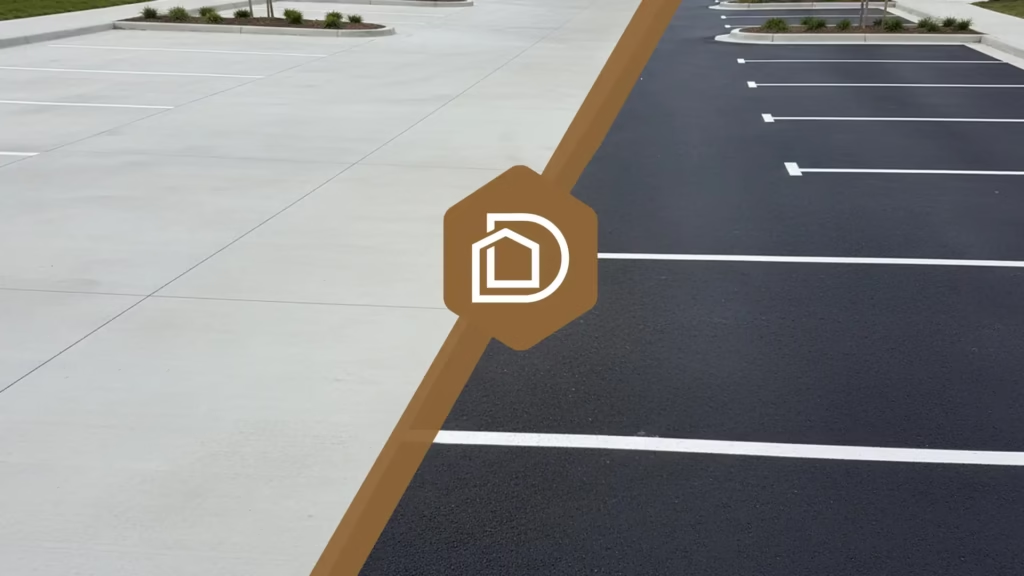
In Charlotte, the choice between concrete and asphalt bases will be dependent upon traffic demand, climatic conditions, and long-term maintenance objectives.
Concrete offers greater stiffness and the capability to carry heavier loads, according to the NCDOT Pavement Design Manual and the National Ready Mixed Concrete Association (NRMCA), meaning that for commercial or industrial sites handling heavy truck traffic, it’s likely the best choice. It is resistant to rutting, softening, and fuel deterioration, allowing for a longer service life with less maintenance.
For smaller or budget-sensitive projects, asphalt remains an ideal option because of its flexibility, quick installation and initial cost. It performs well under moderate traffic but requires regular sealcoating and resurfacing, especially in Charlotte’s humid summers, where high temperatures and rainfall can accelerate wear.
Feature | Concrete Foundation | Asphalt Foundation |
Initial Cost | Higher upfront cost | Lower initial investment |
Load Capacity | Excellent for heavy trucks and commercial traffic | Moderate, suited for light to medium-duty use |
Durability | 30–40 years with minimal upkeep | 15–20 years with regular sealcoating |
Maintenance | Limited to joint sealing and cleaning | Needs periodic patching and overlays |
Weather Performance | Handles Charlotte heat and rainfall well | Can soften in heat, more prone to cracking |
Repair Process | Repairs are longer-lasting but more complex | Repairs are faster but more frequent |
Sustainability | Reflective surface reduces heat island effect | Recyclable and easily resurfaced |
Best Use | Heavy-duty commercial or ADA-compliant lots | Smaller or reconfigurable lots |
What Are the Key ADA Compliance Requirements for Parking Lots?
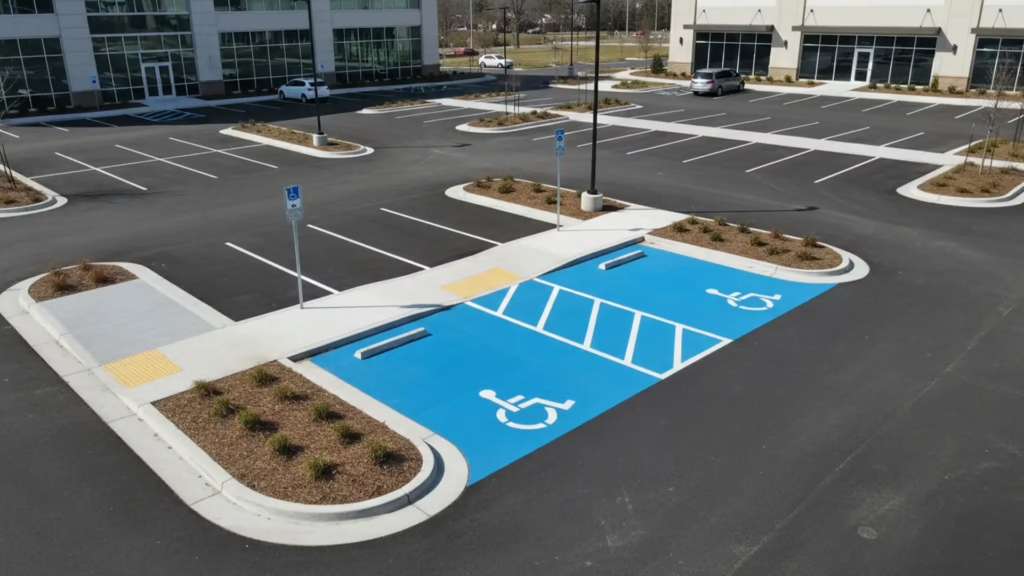
Making a parking lot accessible is not just about marking off a checkbox — it’s about making an actual usable pathway from car to building entrance. The Americans with Disabilities Act (ADA) provides specific guidance on dimensions, the width of access aisles, signage and slope restrictions—and surface conditions—so that individuals with disabilities can safely and equitably access services.
- For instance, accessible parking spaces are required to be located on the shortest accessible route to the Accessible stall floors must be stable, firm, and slip resistant. The access aisles shall be long enough, level, and clearly marked. Must have adequate signage with the International Symbol for Accessibility and be at an appropriate height.
Setting these requirements early in the process – that is, at the design and construction stage – prevents expensive rework later and ensures your facility in the Charlotte area complies with both regulatory standards and user needs. By working with a commercial concrete contractor who has experience in ADA-compliant design standards, your floor will meet code with the proper level of cross-sloping and finishes which provide long-term access.
What Are the Dimensions and Number of Accessible Parking Spaces Required?
Total Parking Spaces in Facility | Minimum Number of Accessible Spaces* |
1 – 25 | 1 |
26 – 50 | 2 |
51 – 75 | 3 |
76 – 100 | 4 |
101 – 150 | 5 |
151 – 200 | 6 |
201 – 300 | 7 |
301 – 400 | 8 |
401 – 500 | 9 |
501 – 1000 | 2% of total |
1001 and over | 20 plus 1 for each 100 or fraction |
*These are minimums per parking facility (lot or garage) — each lot must be calculated separately.
Dimensions & Access Aisles
- Standard accessible parking space must have an access aisle at least 60 inches wide.
- Van-accessible spaces typically require access aisles of at least 96 inches (to allow for lifts and wheelchair deployment).
- Surfaces must have minimal slope—typically no more than 1:48 (≈ 2%) in all directions.
- Accessible parking must be situated so there is a clear, level route from the space to the building entrance, without stairs or obstacles.
How Do Concrete and Asphalt Parking Lot Foundations Compare?
Constructing a sustainable ADA accessible parking lot in Charlotte takes more than technical expertise – it requires local knowledge. Local, seasoned teams relate to how Mecklenburg County’s permitting process, soil dynamics and rain patterns can affect each step of the construction experience. An experienced concrete contractor who knows local conditions can anticipate problems such as moisture-sensitive or stormwater permit triggers for new impervious areas, which help save owners time and reduce costly revisions.
Charlotte-based pros also know how to schedule around inspectors, make supply chains work and source aggregates or ready-mix concrete that comply with local specs and long-term durability standards. These make all the difference in how smooth, strong, and compliant your parking lot will be after construction.
What Are Charlotte’s Specific Building Codes for Parking Lot Foundations and Drainage?
The design of parking lots in Charlotte and Mecklenburg County will be required to meet local stormwater and erosion control standards. Projects that generate new impervious surfaces above certain quantities generally must have stormwater permits and BMPs to address the quality and quantity of runoff.
Typical local expectations include:
- Plans for sediment and erosion control during construction.
- Storm Detention on-site (retention basins or bioswales).
- Stormwater management documents for permanent post development.
Owners should plan for review of timelines, inspections, and potential design adjustments during the permitting process. Partnering with a commercial concrete services provider that understands local review standards can streamline approvals and help maintain compliance with the foundation.
Pro Tip by Durafy
Best Practices for Parking Lot Maintenance
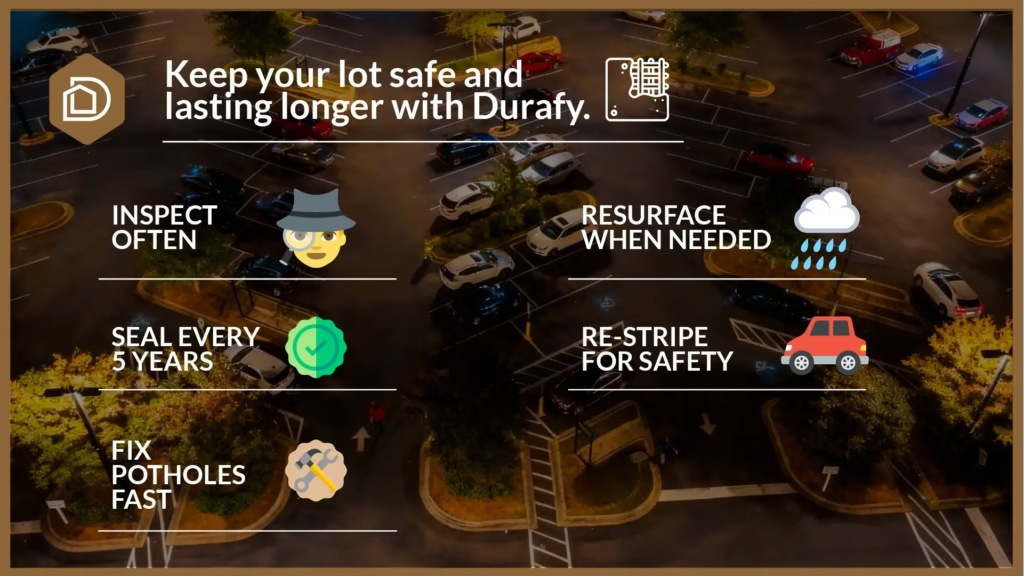
Keeping your parking lot in good condition protects your investment and maintains a safe environment for all. At Durafy, a leading commercial concrete contractor in Charlotte, NC, we know that a little preventative maintenance can save you money on big repairs down the line.
- Begin by walking your lot every couple of Pay attention to any cracks, pooling water, or uneven surfaces that might indicate drainage troubles. Charlotte’s often-fickle weather — heavy rain, heat and the occasional freeze — can accelerate pavement wear, so it’s a good idea to monitor your road more frequently.
- Schedule a sealant application at least once every five years to prevent water from seeping into the First, remove any rough or loose debris and ensure the surface is dry, so the sealant sticks properly. This is a small step that can stop potholes and ensure your lot stays smooth and safe.
- When you do get potholes, fix them on the A patch can be done in a pinch for a few weeks, but to restore the full strength of your pavement, you will want a more permanent fix — cutting out damaged material, compacting the base and repaving with concrete or asphalt.
- Another smart move when the surface begins looking tired or uneven is to It smooths; sheds water and maintains your ADA markings. In high-traffic regions in and around Charlotte, this can add several extra years of life to your lot.
Finally, don’t forget your stripping. New, crisp lines make it easy for both motorists and pedestrians to navigate safely and keep you valid with the ADA. Many plots would have re-striping once every one to three years, depending on how much traffic and sun they get.
When you partner with a commercial concrete contractor like Durafy, the exponentially easier option is to lump all of these tasks into a single maintenance strategy.
Routine maintenance not only preserves the life of your parking lot, but it is also more inviting for anyone who drives into your business in a way that looks professional.
FAQ's
A commercial concrete contractor in Charlotte, NC designs parking lots with proper slopes, trench drains, and catch basins to handle heavy rain and meet stormwater codes.
Concrete offers long-term strength and lower maintenance, while asphalt is cheaper and faster to install. A local commercial concrete services expert helps choose the best option.
Heat and rainfall cause cracks and wear. Regular sealing, resurfacing, and re-striping from local commercial concrete services keep lots safe and compliant.
Durafy combines technical precision with Charlotte-based expertise for ADA-compliant, durable, and professional parking lot results.