

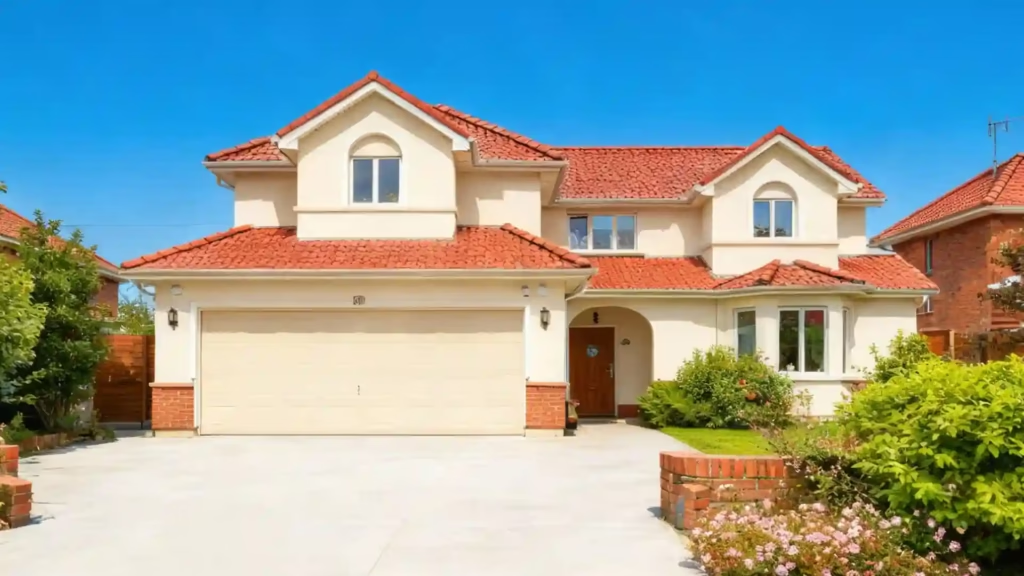
Given the climate in Charlotte (hot, humid summer months with some freeze-thaw conditions), when properly installed by a qualified concrete driveway Charlotte, NC contractor, a concrete driveway will last 30 to 50 years and an asphalt driveway lasts between 15 and 25 years. This wide discrepancy in lifespans is the direct response to that longevity question, controlled by the compressive strength and weathering resistance of the concrete slab.
In the Charlotte area, where we’ve spent over a decade installing and maintaining sidewalks, our data shows that concrete offers better overall value than asphalt for your home improvement project. While the upfront cost is higher, its longer lifespan and lower maintenance make it the smarter choice, especially when considering decorative options like stamped concrete.
What Are Concrete vs. Asphalt Driveways? A Technical Breakdown
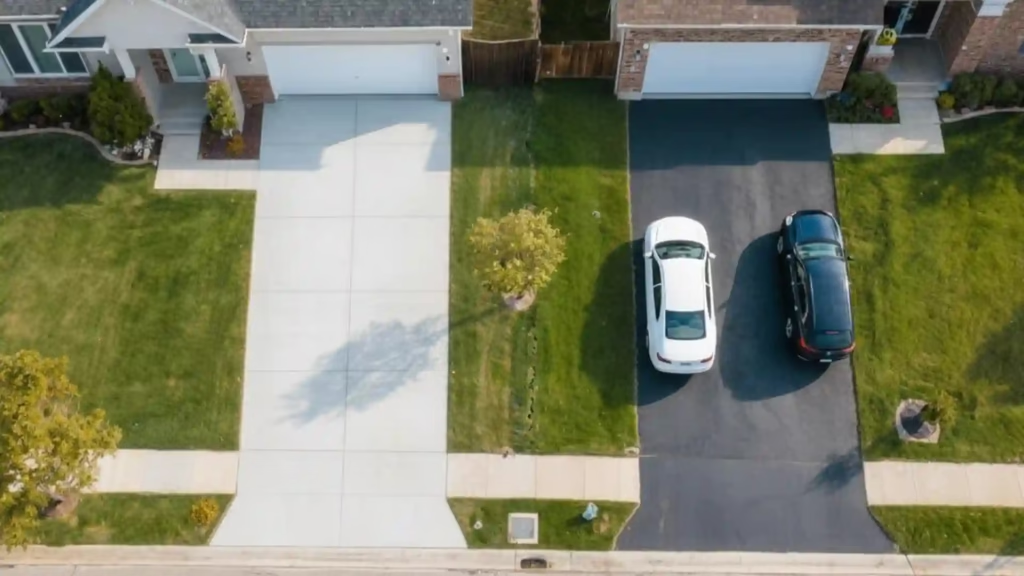
Although concrete and asphalt are both excellent materials for driveways, there are differences between these two construction materials. These fundamental discrepancies affect everything from how they are first installed, to their long-term effectiveness throughout their lifetime, and maintenance cost on your Charlotte property.
| Feature | Concrete Driveway | Asphalt Driveway |
| Pavement Type | Rigid Pavement | Flexible Pavement |
| Primary Binder | Portland Cement | Asphalt Cement (Bitumen) |
| Key Strength | High Compressive Strength | Flexible Tensile Strength |
| Standard Thickness | 4-6 inches | 2-3 inches (on a compacted base) |
| Installation Temp. | Above Freezing (Typically >40°F) | Hot (>250°F) for proper compaction |
| Curing/Set Time | 7-28 days for full cure | Ready for light traffic in 24-48 hours |
| Surface Texture | Can be finished (broomed, stamped, exposed aggregate) | Smooth, matte finish |
What This Means for Charlotte Homeowners: According to the Federal Highway Administration (FHWA), selecting between rigid paving and flexible paving is a vital design decision of long-term consequences. Concrete is a hard material and is quite resistant to stains such as fuel or oil, which are often issues in driveways.
And the flexibility of asphalt can be desirable in areas with less than stable subgrades, although this is often negated if the driveway has been constructed according to best practices, such as a properly engineered base.
This basic engineering difference is the first factor in an educated decision you make for your home.
Concrete vs. Asphalt Driveways: Lifespan & Durability in Charlotte
When considering which kind of driveway to invest in, you want to know how long it will last and how well it will stand up to kids playing, cars parking and Charlotte’s weather. The average lifespan of a concrete driveway vs. asphalt driveway is one of the most important factors in that decision.
What Is the Average Lifespan of Concrete vs. Asphalt Driveways?
The concrete driveway lifespan far exceeds that of gravel and asphalt alternatives. Even with regular maintenance, both asphalt and concrete can entail major servicing: an asphalt driveway should be resurfaced every 3 years, a concrete one at least every 10. When evaluating the lifespan of concrete vs. asphalt in hot climates like Charlotte’s, the gap becomes even more pronounced — asphalt softens under prolonged heat, accelerating surface wear, while concrete maintains its structural integrity season after season.
How Does Charlotte's Climate Affect Driveway Longevity?
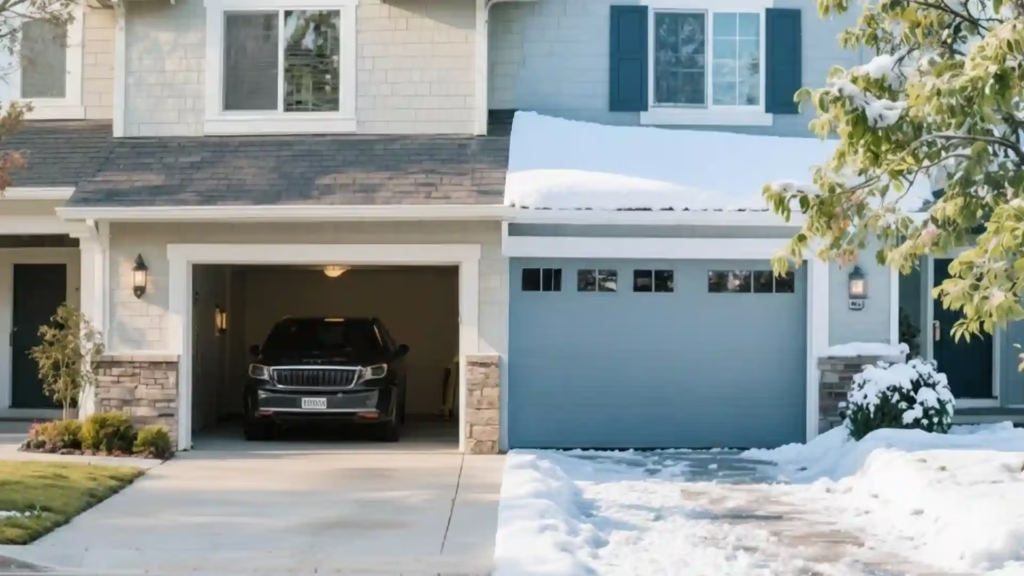
Charlotte experiences humid summers with temperatures often above 90°F and winters that dip below freezing. Concrete’s reflective surface reduces thermal strain during hot months, while asphalt’s dark color retains heat for quicker snowmelt in winter.
However, freeze-thaw cycles can foster hairline cracks in concrete if not properly jointed, whereas asphalt benefits from its flexibility to resist spalling. Balancing these factors helps predict real-world performance in your neighborhood.
| Surface Material | Typical Lifespan in Charlotte | What Its Longevity Depends On |
| Concrete Driveway | 30 to 50+ Years | Quality of the initial pour and occasional sealing. |
| Asphalt Driveway | 15 to 25 Years | A strong, compacted base and fresh sealcoating every 2-5 years. |
These estimates of average lives are consistent with industry practice. According to the American Cement Association, concrete pavement is designed for a structural life of 20+ years and can be kept in service far beyond that with limited maintenance. Also, the National Asphalt Pavement Association (NAPA) notes that the asphalt driveway lifespan can reach approximately 20 years or more with proper maintenance.
How Much Does Concrete Driveway Installation Cost in Charlotte, NC?
| Cost Component | Concrete Average | Key Considerations |
| Base Installation | $4–$8 / ft² | Excavation, gravel base |
| Decorative Finishes | $6–$15 / ft² | Stamping, staining, coloring |
| Reinforcement & Joints | $1–$3 / ft² | Rebar or wire mesh, control joints |
What Are Asphalt Driveway Installation Costs and Influencing Factors?
Asphalt driveways install for approximately $2 to $7 per square foot owing to simpler paving processes and lower material cost. Key cost drivers include:
- Thickness of asphalt layer – Thicker lifts improve longevity but increase material expense.
- Base preparation – Proper grading and compaction reduce early failures.
- Temperature conditions – Cooler temperatures at installation require additional compaction time.
Understanding these factors clarifies how initial savings compare to long-term value.
How Do Concrete and Asphalt Driveways Impact Home Value and Curb Appeal?
The Design Arena: Concrete's Versatility vs. Asphalt's Basic Nature
Consider your driveway a blank slate. Concrete is almost the oil paint of building materials, capable of bringing subtle tones into sharp relief, and with a vast range of textures at hand.
Concrete can even be stamped and textured to resemble European cobblestone or natural slate. It can be stained from the inside or out to coordinate with your home’s exterior. This is more than just a slab; it’s a designed landscape feature.
Asphalt is more akin to a trusty black permanent marker. It makes a clean, dark line, one that’s nice and consistent when it’s new. But after that, artistic license ceases.
Where does this flexibility of designing really matter? According to the National Association of Realtors, improvements with high curb appeal provide some of the greatest returns (approximately 83–95%) at resale.
Custom concrete driveways are about much more than surfaces; they’re strategic enhancements.
Top 3 Insights by Durafy
Beyond basic function, your driveway choice is a critical that impacts buyer perception and property value. Here’s what most contractors won’t explain in detail.
- The “Silent Salesman” vs. The “Red Flag”
A clean concrete slab indicates well-cared-for property and low future costs on home improvement, which creates buyer confidence. Cracked asphalt is a signal of repair costs to come, and it can lower bids.
- The “Charlotte Cool-Down” Effect
Asphalt can absorb the intense heat of summer and radiate it back to your house. Readily visible on the site are driveway slabs constructed of light-colored concrete, which have a high Solar Reflectance Index (SRI) and remain cooler for greater comfort and energy savings.
- The Appraiser’s “Lifetime Liability” Calculation
Appraisers assess the remaining service life. A 25 year old concrete driveway is nothing more than middle aged and a 20 year old asphalt driveway, even though they look similar to 5 – 7 day old driveways, will generally need to be replaced. Here is where that residual economic life comes in, because this specific variance in the remaining years can impact the value of your house.
The Bottom Line for Homeowners in Charlotte:
For a budget-friendly greeting, asphalt is great. To make the grand entrance with curb appeal that holds its value and lasts for the long term, nothing compares to concrete driveway installation from a skilled professional.
A professional concrete driveway contractor will make sure the investment provides you with a great return.
Concrete vs. Asphalt: The Eco-Friendly Driveway Breakdown
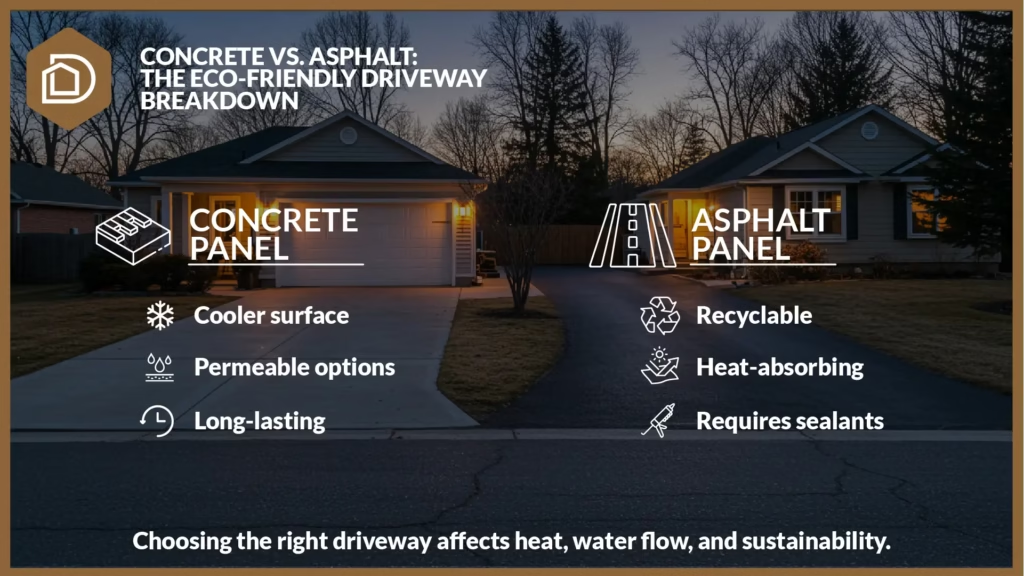
Choosing the eco-friendly option for your pavement is a fundamental part of any home improvement endeavor. And beyond price and appearance, your choice affects local heat, the flow of water and energy use.
Concrete: The Modern, Sustainable Canvas
Modern concrete offers surprising environmental benefits. Its light-colored surface reflects sunlight, reducing the “heat island” effect and keeping your property cooler. For ultimate sustainability, stamped concrete and other permeable styles allow rainwater to seep into the ground, reducing stormwater strain. Paired with a decades-long lifespan of a concrete driveway, it’s a durable, low-waste choice.
- Eco-Pros: Cooler surface, permeable options, long-lasting.
- Eco-Cons: Production requires significant energy.
Asphalt: The Practical Recycler
Asphalt’s major environmental win is its recyclability; it’s consistently repurposed into new pavement. However, as a petroleum product, it absorbs heat and requires recurring chemical sealants to maintain its lifespan, presenting an ongoing environmental trade-off
- Eco-Pros: The world’s most recycled material.
- Eco-Cons: Heat-absorbing, relies on petroleum and chemical sealants.
Choosing the Right Device for Your Home
Choose a concrete driveway for a long-term, eco-conscious investment that reduces heat and offers beautiful, low-maintenance durability.
Choose an asphalt driveway for a budget-conscious project where the high recyclability of the material and lower initial cost are the primary drivers.
How Can Durafy Help With Concrete Driveway Installation and Repair in Charlotte?
Durafy brings over a decade of local expertise in pouring, finishing, and repairing concrete driveways in Charlotte, NC. Our certified crew handles site preparation, custom stamping, and long-lasting sealants to deliver a seamless, durable driveway.
For homeowners exploring options like a heated driveway in Charlotte, NC — a growing choice for managing winter freeze-thaw cycles — our team can consult on radiant heating systems integrated directly into the concrete slab, combining long-term durability with seasonal convenience.
Contact Durafy today to schedule a free concrete driveway estimate and ensure your project proceeds with precision and professionalism.
FAQ's
Asphalt's flexibility excels in freeze-thaw cycles, while concrete's heat-reflective surface maintains integrity in hot summer months. When comparing the lifespan of concrete vs. asphalt in hot climates, concrete consistently holds its shape and surface integrity longer under prolonged heat exposure.