

Why Concord is one of the most active commercial concrete Markets
The data doesn’t lie. The Cabarrus Economic Development Corporation has reported that a new 2,300,000-square-foot facility for production, manufacturing, and distribution has been completed in the Concord area, anchored by large companies like Red Bull, Ball Corporation, and Rauch at The Grounds at Concord.
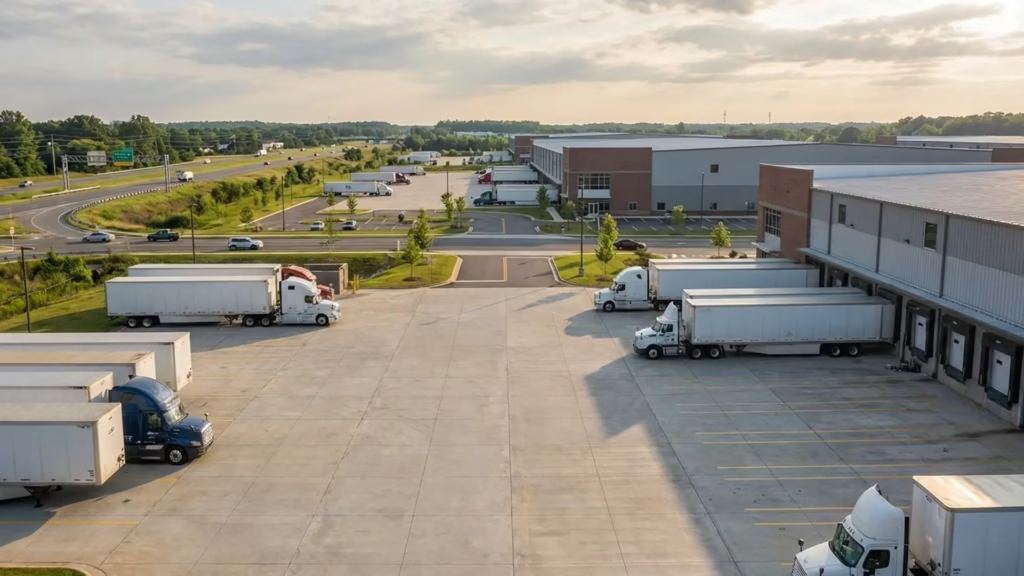
That project is not an anomaly. Concord already has more than 20 million square feet of industrial and business park space spread across eight parks, according to the City of Concord Economic Development office. The Concord Regional Airport Business Park, the Greenfield Business Park along I-85, and the Cabarrus Business and Technology Center together represent a dense concentration of manufacturing, distribution, and logistics facilities, all of which have active maintenance, expansion, or new-build concrete needs at any given time.
For a commercial concrete contractor operating out of or serving Concord, there is no shortage of work, but there is a high bar for technical capability.
The I-85 corridor is the spine of all of it. Companies like Kroger, Carvana, STERIS Corporation, and Gibson USA have established operations in the area precisely because of the logistics access that interstate provides. Every distribution center, fulfillment center, and manufacturing facility on that corridor has floors, docks, aprons, and parking fields that need to be poured, finished, and maintained to industrial standards.
Commercial vs Residential Concrete in Concord: Key Differences & Specs
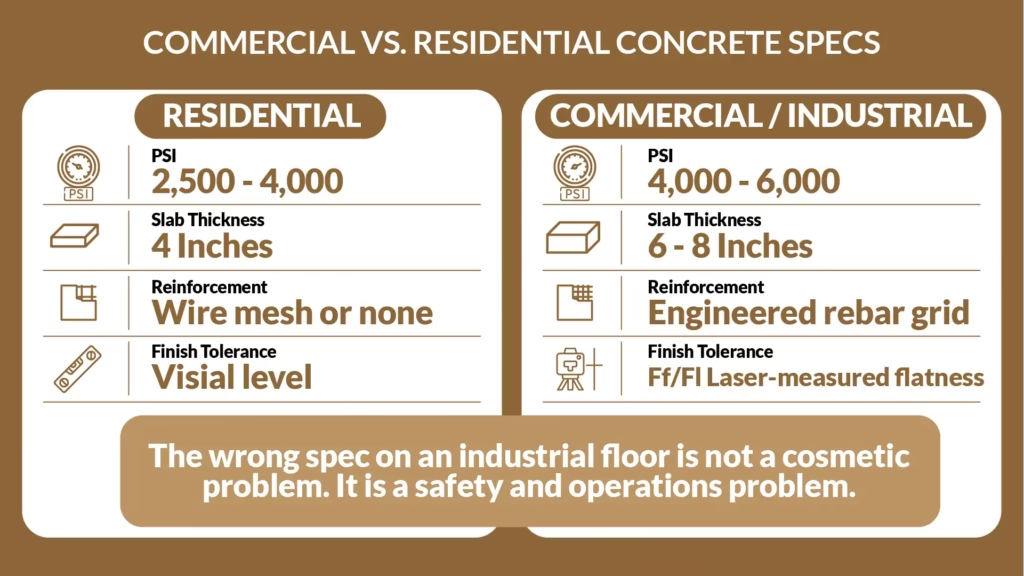
There are many similarities between a homeowner who is installing a new driveway and a logistics company constructing a new 300,000-square-foot distribution center in Concord. However, they vary greatly in all aspects of technical specifications, mixes, finishing standards, and expectations for long-term performance. These are two very different applications of concrete.
PSI requirements
On average, the PSI rating for standard concrete at home is between 2,500-4,000. For commercial or industrial concrete floors, specifically in Concord, this is much different. For example, DecoCrete Services states that the minimum PSI of commercial concrete is usually/always greater than 4,000. In fact, it is quite common for warehouse-type facilities (i.e. floor areas that will see forklift traffic, heavy machinery and stored goods with extensive floor loading) to have a minimum PSI between 4,500 and 5,000.
Evenson Concrete Systems has noted that most industrial slabs are at a minimum required concrete strength between 4,000 and 6,000 PSI; the higher end of this range is typically required for either continuously-move heavy equipment or extreme point-load applications. Due to the number of forklifts carrying production materials around-the-clock over a 2 million square foot floor at The Grounds (located in Concord, NC), this particular scenario wouldn’t allow for less than a 4,500 PSI mix (for any particular location).
Slab thickness
Normally, residential concrete driveway thickness is 4 inches. Commercial warehouse concrete floor thickness starts at 6 inches and, for heavy industrial use, typically increases to 8 inches. Based on information from DecoCrete Services, warehouse floors, which will have to provide support for huge static loads created by high-density storage racking and dynamic concentrated loads created by material handling equipment, are generally designed for an 8-inch thickness in anticipation of how they may be used in the future and what type of equipment may someday be needed.
Reinforcement and joint placement
Commercial slabs in Concord use a reinforced concrete grid (reinforcing rods, fibres, or both) to provide adequate support for loads placed on them. Additionally, control joints are placed within the slab to aid in controlling cracking due to load transfer and other factors (for example, temperature changes).
Evenson Concrete Systems states that controlling cracks in industrial floors can be accomplished by placing them properly, using appropriate amounts of reinforcement, curing the slab correctly, and providing a high-quality cement mix with moisture-barrier properties. Misplacing a joint on a 100,000 square foot warehouse floor will result in cracks in locations that can cause hazards during material handling or will damage products and/or equipment.
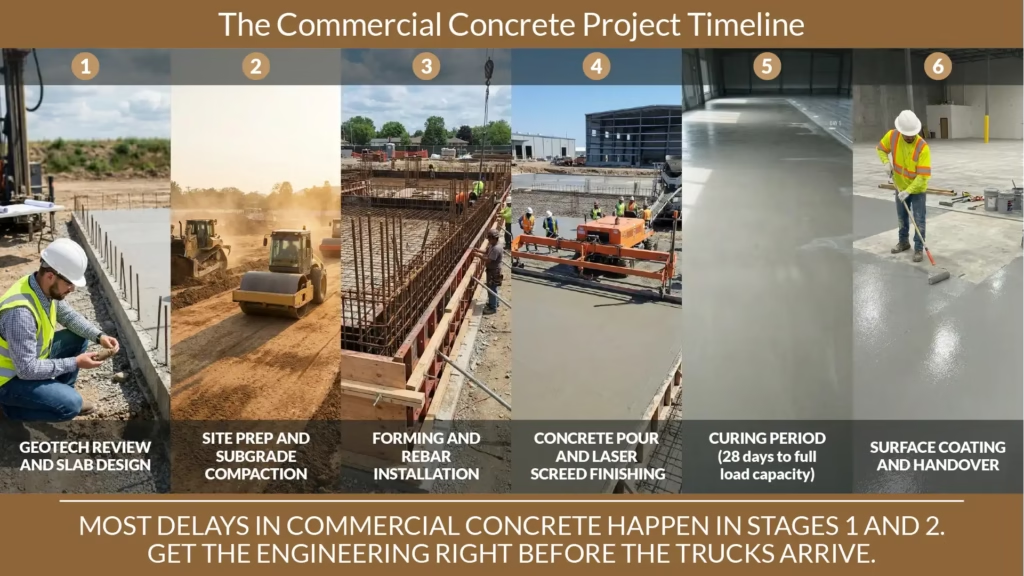
Every commercial concrete contractor in Concord must perform the construction of the stated slab design under the supervision of an engineer that has certified the design approval before any trucks arrive for delivery.
Commercial Concrete Services in Concord NC
Warehouse and industrial floor slabs
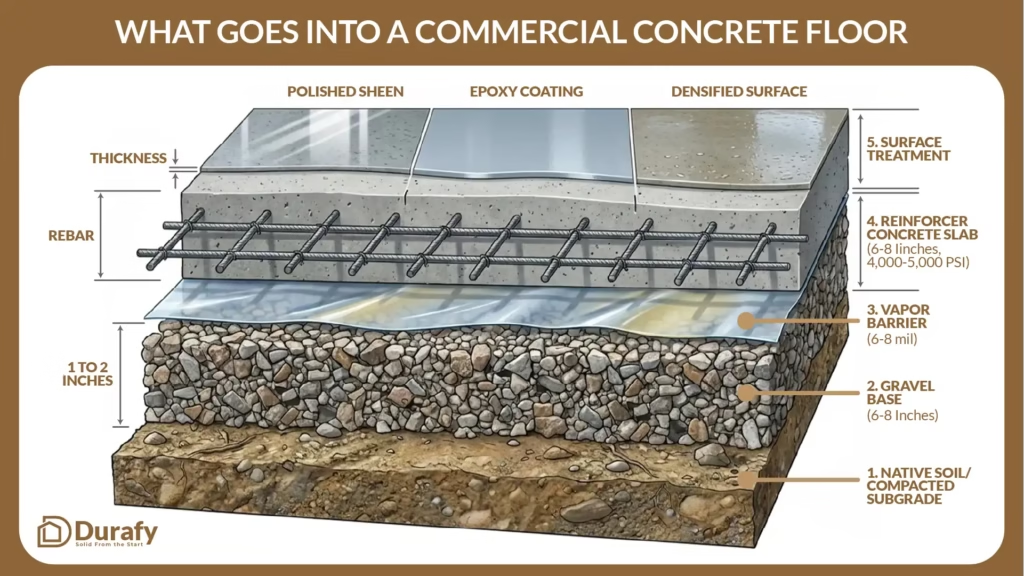
The floor will be the most important concrete element in all distribution/manufacturing facilities. It supports the entire load required for the racking systems, the continual dynamic effect of loaded forklifts, and the chemical exposure based on the type of products that are handled in the facility. A properly designed and installed industrial concrete slab in Concord should have the appropriate PSI, subgrade preparation for the soil located in Cabarrus County and a flatness tolerance that allows safe operation of material handling equipment.
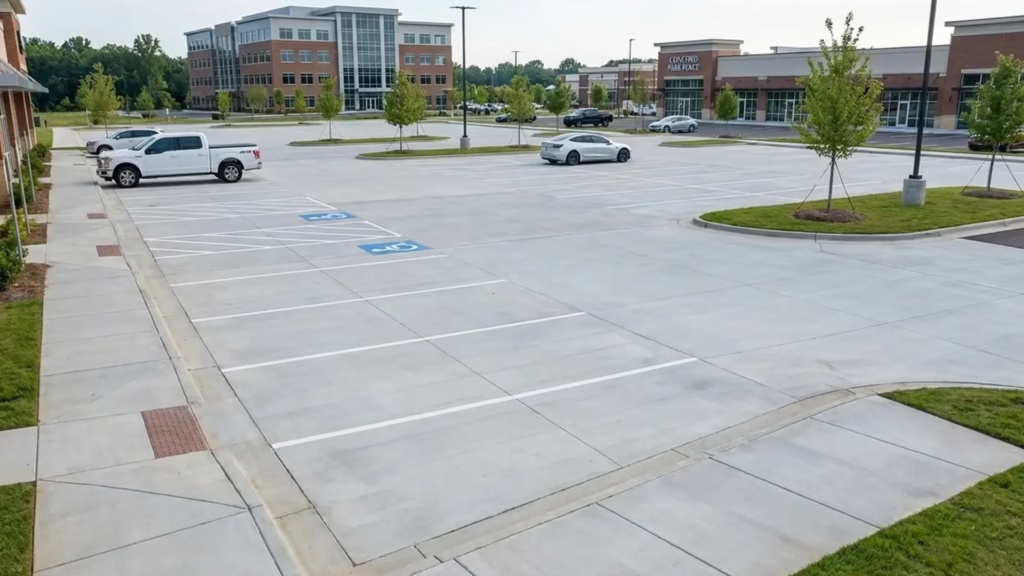
Commercial parking lots and paving
Epoxy and specialty floor coatings
What to ask before hiring a commercial concrete contractor in Concord
- Are permits and code compliance included in the scope?
In Concord, permits are generally required for most commercial concrete projects; therefore, they must comply with the North Carolina Building Code as well.
All contractors involved in commercial concrete projects should manage permitting, inspections, and ensuring that their project complies with the North Carolina Building Code. Durafy manages all of these items during the commercial concrete project planning process to minimize any delays or complications due to noncompliance. - What is a realistic project timeline?
Big concrete jobs require a lot of planning and scheduling. Most warehouse slabs measuring 100,000 square feet will take between 4 and 8 weeks to finish depending on site conditions and the way the project is sequenced, plus time to cure prior to being fully loaded.
Precise coordination between all the different team members is crucial. Durafy has put major emphasis on establishing structured timelines and executing them efficiently so that the project is completed on time. - What PSI should a warehouse floor in Concord be?
A starting spec for light manufacturing/standard distribution would be between 4,000 and 4,500 PSI, 6″ thick; whereas a heavy industrial (Large Fork Lifts, Large Presses, & Density Rack Storage) facility would be approximately 5,000 PSI at 7″ – 8″ thick.
As indicated by Gra-Rock, concrete used for warehouses, factories, & similar large commercial should typically be in the range of 4,000 to 5,000 PSI. However, the right spec will ultimately be determined by your concrete contractor who can give a recommendation based on reviewing the geotechnical report as well as the intended use of the facility.
Get a Commercial Concrete Quote in Concord NC
Concord is building at a pace that requires concrete contractors who can execute at the same scale. If you have a warehouse floor, tilt-up project, loading dock, truck court, or commercial parking field in Concord or anywhere along the I-85 corridor in Cabarrus County, reach out for a project consultation.
We work directly with general contractors, developers, and facility owners. We review geotech reports, coordinate with structural engineers, and deliver the kind of flatness tolerances and surface quality that industrial facilities in this market require. No residential crew doing commercial work on the side. Just experienced commercial concrete contractors who know this market.