

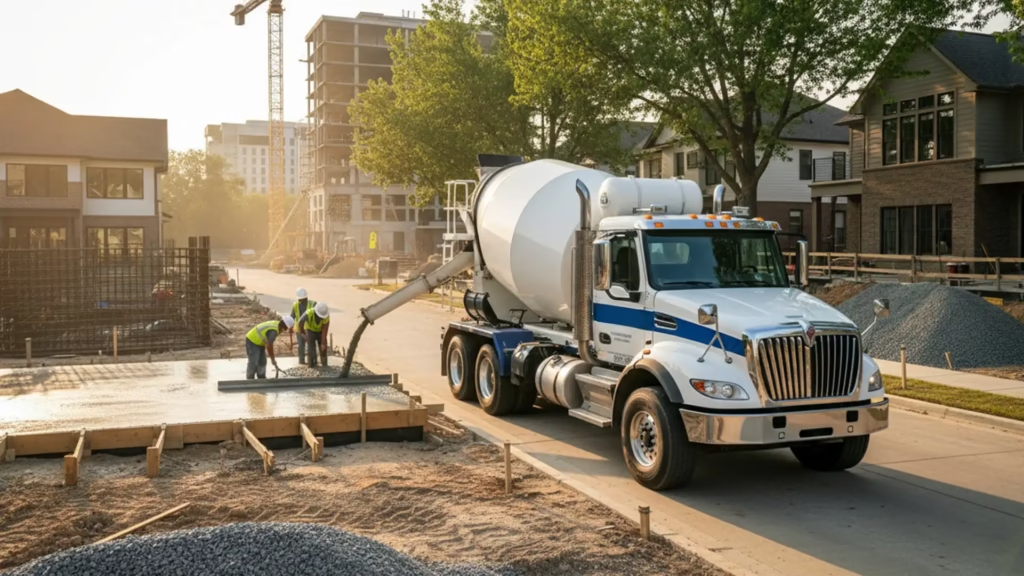
Why you need a Charlotte Concrete Specialist, not a handyman
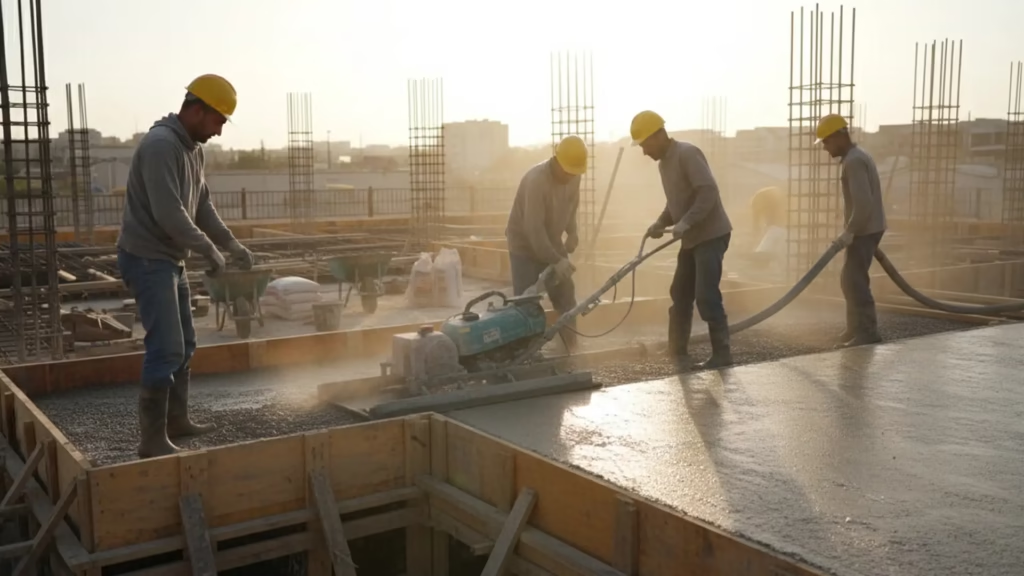
Concrete work in Charlotte is difficult because of its soils. It has two types of soil (Piedmont clay and decomposed granite) that both expand when wet/freezing and contract when dry/thaw. And also, the freeze-thaw cycles (December to February) in the southeastern US find shortcuts for concrete work very quickly.
A skilled concrete contractor can be either a larger general contractor or a contractor with a local specialty, and they will do much more than just build the concrete. Concrete contractors know the soils in their area (the soils types), the Charlotte Land Development Standards; they also know the permit process, in addition to knowing what needs to be on the concrete substrate to support the concrete slab correctly.
This is the difference between a driveway that will last for 10 years and one that will last for 2 years.
Roadside crews and low-bid operators often skip the expensive parts: proper subgrade compaction, correct rebar sizing, expansion joint placement, and moisture barriers. Those aren’t optional extras. They’re the difference between concrete that performs and concrete that cracks.
Below the low bid: The checklist for evaluating Charlotte contractors
If you’re comparing quotes, look past the final number and scrutinize the actual plan. A great general contractor knows that durability isn’t luck; it’s a specific process that prevents costly problems later. This is where you separate the pros from the weekend warriors.
Here is the non-negotiable checklist we use to deliver real value and protect your budget:
- Proof of Compliance: Are they up-to-date on Charlotte’s specific permitting for driveways, foundation work, and, for commercial clients, ADA-compliant slopes? The right contractor manages the paperwork to prevent expensive city stop-work orders.
- The Reinforcement Plan: Are they just dropping some wire mesh, or do they specify the right rebar size and placement? Load-bearing areas, like a garage slab or a commercial loading dock, need a structural plan, not guesswork.
- Warranty & Insurance: Ask about their general contractor licensing, liability insurance, and the specific warranty on their labor. You need a guarantee, not a promise.
Durafy Tip: If a contractor’s quote is significantly lower than others, ask what they’re leaving out. In most cases, it’s the subbase prep — the single most important factor in long-term concrete performance
Concrete vs. Pavers: What to choose?
A lot of Charlotte property owners argue over concrete vs pavers. Decorative pavers look great, especially in small patios or when creating patterns; poured concrete is the ideal choice for driveways and parking areas that need to endure long-term use.
| Feature | Poured Concrete (Professional Installation) | Segmented Pavers (Stone/Brick) |
| Durability & Cracking | Highly resistant to wear when reinforced and properly sealed. Cracks are possible but preventable with correct expansion joints. | Designed to flex with the soil. Individual pavers can shift, leading to tripping hazards or maintenance. |
| Maintenance | Very low. Requires sealing every few years. Easy to pressure wash. | Higher. Prone to weeds, moss, and requires periodic sand replacement in the joints. |
| Best for Budget | Lower initial cost for large areas like a long driveway or commercial parking lot. | Higher initial cost due to intensive labor for individual piece installation. |
| Local Climate | According to FHWA when poured with the right air-entrainment mix, it easily withstands freeze-thaw cycles | Excellent drainage, but individual pieces can still shift due to saturation. |
| Repairs | Can be patched, though repairs may be visible. Full slab replacement is a major expense. | Very easy to repair; just lift and replace the damaged paver. |
What residential concrete services are available in Charlotte?
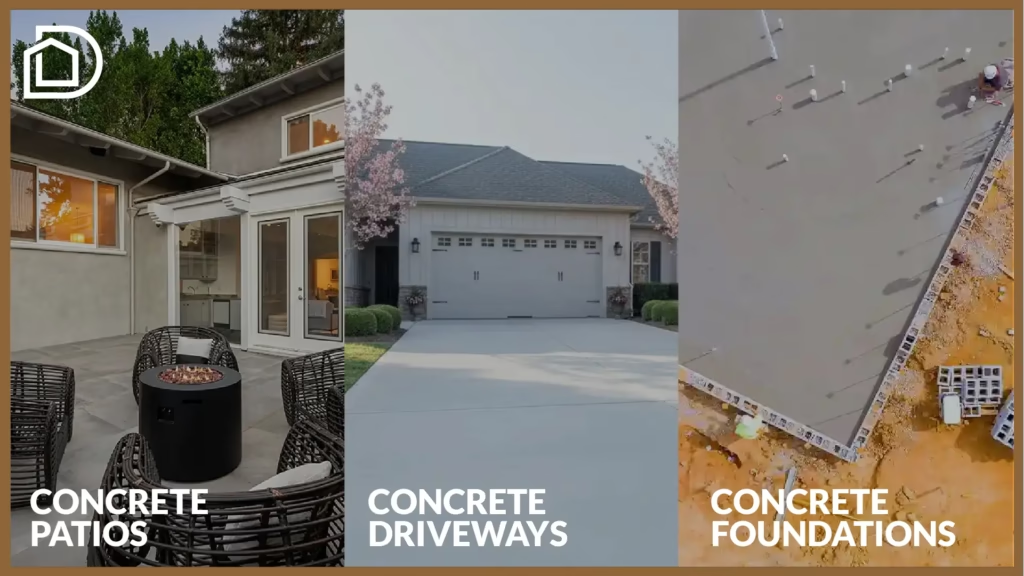
1. Driveway Installation & Replacement
A Charlotte concrete driveway is more than just a flat surface to park your car and basketball hoop on— it’s a load-bearing structure that was designed to withstand decades of vehicle traffic and extreme seasonal changes.
Driveway slabs shall comply with the city of Charlotte Land Development Standards Manual concrete driveways should meet a minimum compressive strength of 3,600 PSI at 28 days, with proper subgrade compaction and 4–6 inches of slab thickness depending on use.
2. Patio Construction & Outdoor Slabs
Constructing patios and outdoor slabs in a humid subtropical climate like Charlotte’s, concrete can be affected by huge swings in temperature and amounts of moisture. Good concrete contractors will build into their design expansion joints, sufficient slope (¼ inch per foot) for drainage as well as possible decorative finishes (e.g., stamps or stains).
In South End and Plaza Midwood, aesthetics may be emphasized and concrete may be designed to blend into the surrounding area with outdoor kitchens, pergolas and fire pits. As well, the NC Building Code recommends designing the patio/site in a manner such that appropriate grading and runoff controls are used to avoid structural displacement of the pad from excess build-up of water.
3. Foundation & Structural Concrete
Whether it is a new addition in Huntersville or a garage slab in Myers Park, foundations all need the same adherence to the bearing capabilities of soil and controlling moisture. Improper drainage and soils high in clay content (as are many found in Mecklenburg County) can lead to settlement or cracking if not addressed properly.
Per the City of Charlotte Engineering Standards Manual, residential footings should extend at least 12 inches below undisturbed soil and meet local frost depth requirements.
Which commercial concrete services does Durafy provide in Charlotte?
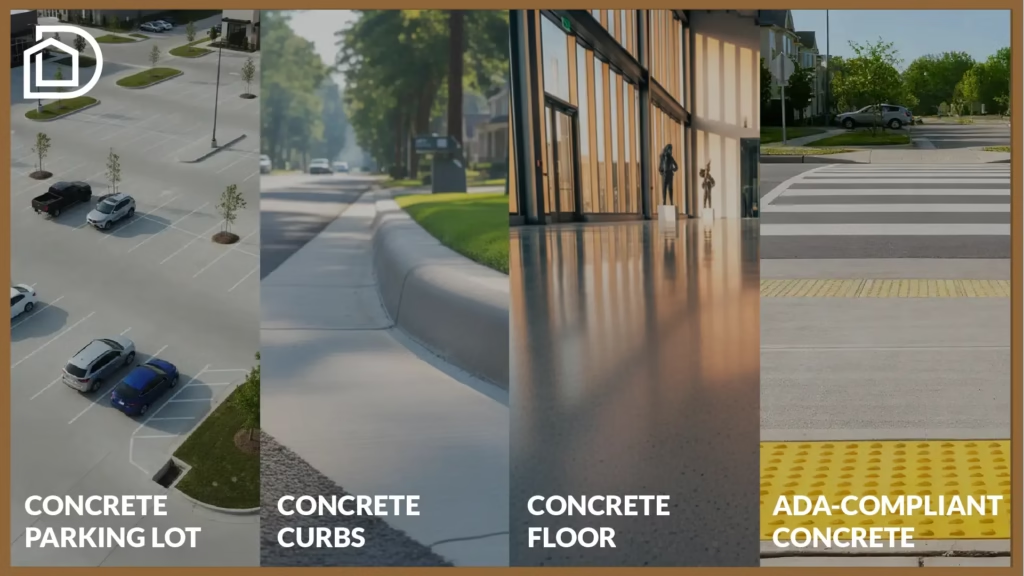
Commercial concrete work is a different discipline than residential. The loads are heavier, the code requirements are more layered, and the consequences of a failure — whether structural or a compliance violation — are more significant. A commercial concrete contractor working in Charlotte needs to be familiar with city engineering guidelines, ADA requirements, NCDOT specifications, and ACI design standards. Here’s what that looks like in practice.
Commercial Service | What Makes It Critical | Compliance & Maintenance Notes |
Parking Lots | Load rating and subbase performance under heavy vehicle traffic. | Engineered subbase, control joints, drainage, and periodic sealing required. |
Curbs & Wheel Stops | Traffic management and edge protection for landscaping. | Placement directly affects stormwater runoff and pavement longevity. |
ADA-Compliant Ramps | Legal accessibility requirements and slope tolerances. | Must meet 2010 ADA Standards and pass Charlotte permitting review. |
1. Parking Lot Construction & Design
All commercial parking lots in Charlotte fall under city engineering guidelines for subgrade, slope and drainage.
The City of Charlotte Land Development Standards Manual requires that paved areas have a 2% cross-slope for drainage and good compaction of the base course suitable to carry commercial traffic loads.
2. ADA-Compliant Concrete Work
Under the 2010 ADA Standards for Accessible Design, sidewalks must have a maximum 2% cross slope and running slopes less than 5% without handrails. These guidelines are typically examined during site permitting in Charlotte by the Charlotte Engineering & Property Management Department to verify whether curb ramps, parking spaces and accessible routes comply with state and federal code.
3. Concrete Curbs & Gutters
Curbs serve both structural and drainage functions, channeling stormwater toward inlets and protecting pavement edges. The NCDOT Standard Specifications for Roads and Structures, Section 846, governs concrete curb and gutter design across North Carolina.
4. Asphalt Paving & Resurfacing
5. Industrial & Commercial Concrete Floors
Concrete floors are common fixtures in warehouses, manufacturing plants and retail spaces (including those located inside Mecklenburg County). The design and erection of these floors do fall within the scope of guidance from the American Concrete Institute (for example, ACI 302.1R) related to slab thickness, surface tolerances, jointing and load classifications.
How does Durafy provide transparent and stress-free project quotes?
- Most people dread getting contractor quotes because the process is opaque — you get a number without understanding what’s behind it, and comparing proposals from different contractors feels like comparing apples to oranges. We built our quoting process specifically to fix that problem.
- Every Durafy quote starts with a detailed scope that spells out the work phases, materials, timeline, and cost drivers. That level of clarity isn’t just convenient — it’s what makes it possible to compare our proposal against any other contractor’s on equal footing. Here are the three quote options we offer:
- Free Basic Quote — Designed for homeowners and property managers in the early research phase. You’ll get a realistic cost range and timeline estimate so you can start planning your budget without committing to anything.
- Custom Onsite Quote — Includes a site visit (typically scheduled within 48 hours), a full written proposal breaking out labor, materials, and permit costs, site photos, design renderings, and access to financing options if needed.
- High-End Render Quote — Built around visual planning. You’ll receive a 3D rendering of the finished project before any work begins, so there are no surprises about what the final result will look like.
Every quote comes with a straightforward commitment: no pressure to decide immediately, and an open door to ask for changes or clarifications before giving us the go-ahead. We’d rather you take the time to make the right decision than feel rushed into something.
What should you expect during your concrete service consultation?
A little preparation goes a long way before a contractor arrives for a site visit. If you can gather basic access information for the property, note any visible issues like cracks, drainage problems, or areas where water pools, and have a general sense of the finish or style you want, the assessment will move faster and the proposal will be more accurate.
During the site visit itself, expect measurements, soil and drainage observations, and a discussion about load expectations — how many vehicles, how much weight, what type of traffic. Contractors should also walk you through sample finishes so you can get a feel for color and texture options in person rather than guessing from a photo. Permitting requirements and realistic timeline constraints will typically be addressed during this conversation as well.
The goal isn’t to sell you something on the spot. It’s to give you enough information to make a confident decision about your project — and to know exactly what you’re getting before a single yard of concrete gets poured.
Frequently Asked Questions
Related reading: Charlotte concrete services — costs, contractors & guide
Related reading: Residential concrete contractor in Charlotte — expert home services
Related reading: Slab vs. pad guide for Charlotte concrete projects