

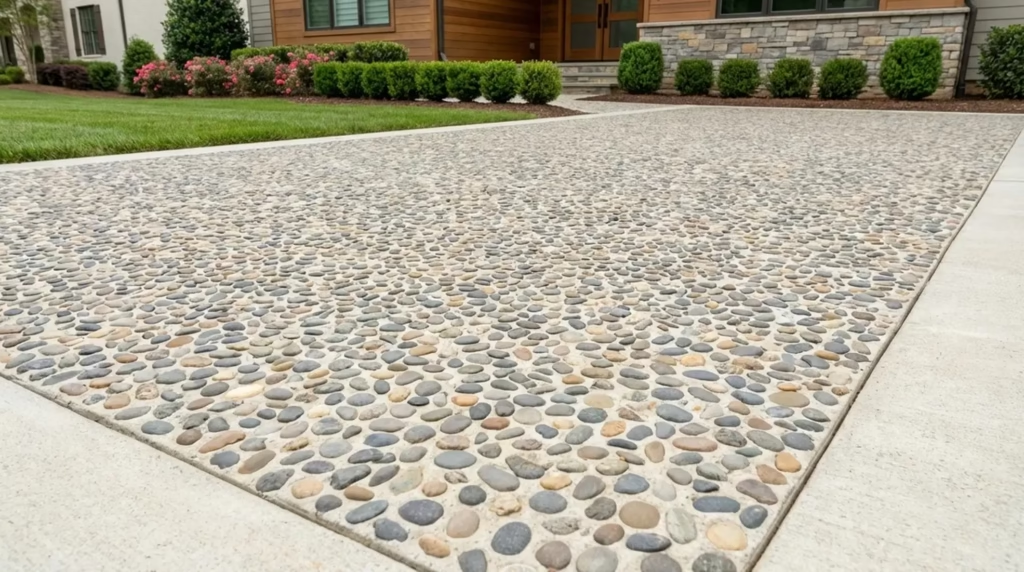
Installation process of exposed aggregate concrete in Charlotte, NC
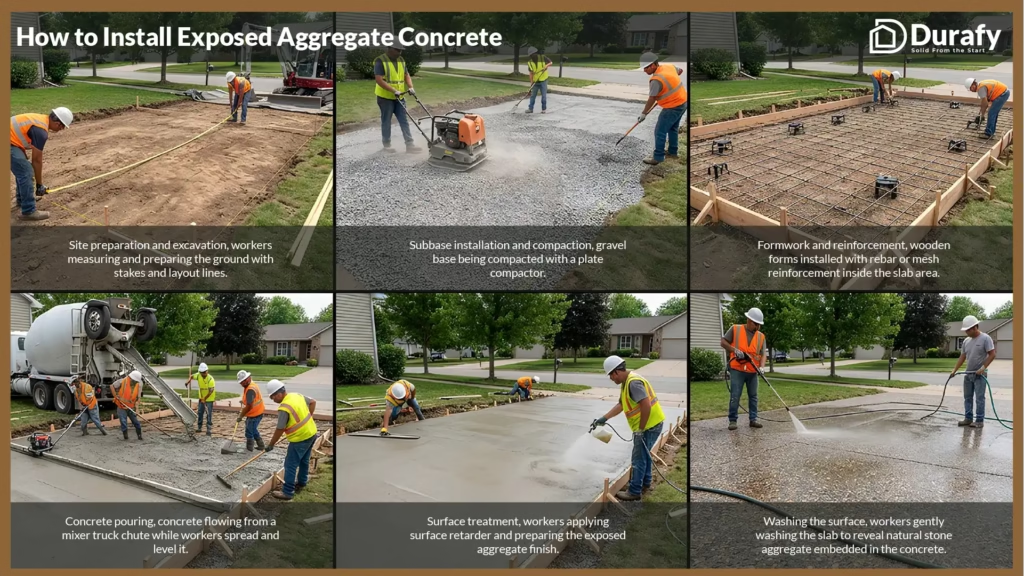
Getting that perfect “pebbled” look isn’t just about pouring mud; it requires a professional “feel” for the material and the local climate.
- Preparing the Subgrade: First, we have to deal with our famous North Carolina red clay. We grade the area for drainage—crucial for preventing “ponding”—and compact the soil until it’s a rock-hard subgrade.
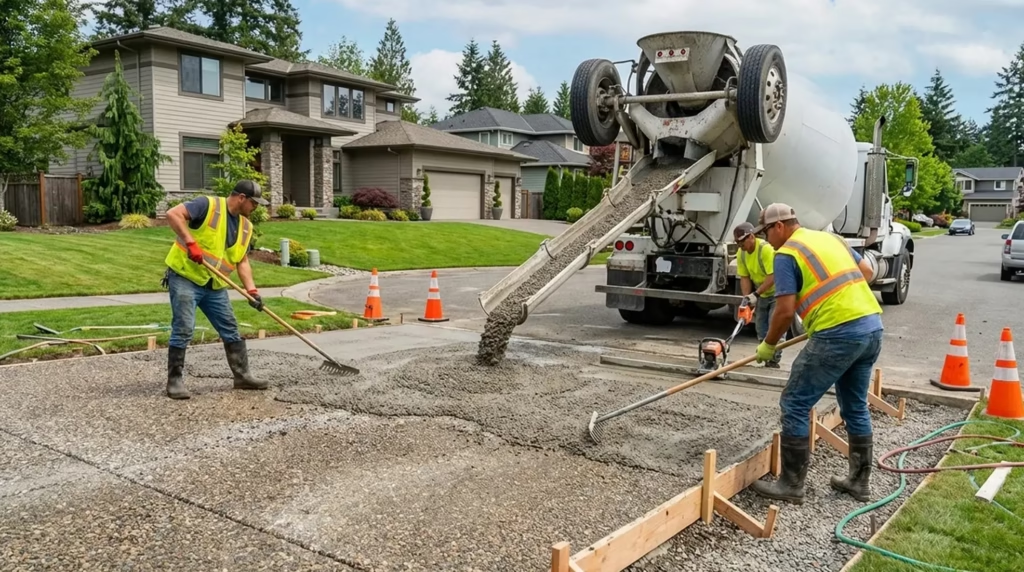
- The Mix & Pour: We typically use a high-strength 4000 PSI mix loaded with the specific stones you’ve picked out. We take care during the pour to prevent honeycombing, which are those ugly air pockets that can weaken the edges of your slab.
- Revealing the Beauty: Once the concrete is leveled, we apply a surface retarder. This specialized liquid keeps the very top “skin” of the exposed aggregate concrete from hardening while the rest of the slab sets up. A few hours later, we wash that top layer off with a pressure wand, and suddenly, your driveway looks like a custom mosaic.
Curing for exposed aggregate concrete
Due to the high temperatures in Charlotte, the concrete may dry too quickly, causing “spiderweb” cracks. According to the American Concrete Institute (2023) proper curing, is one of the most important parts of building good concrete to achieve a full-strength concrete slab with adequate time for long-term use.
The amount of moisture that remains in the concrete for at least seven days will determine if that driveway lasts only ten years or if it will last for over forty years — depending on the method of curing: either “wet cure” or using a curing compound.
Keeping Investment Sharp
A great feature of an aggregate finish is that they offer low-maintenance properties; however, just because it has low-maintenance properties does not mean you are able to ignore them altogether.
- Sealers are important for colors and to prevent oil stains: Every two to three years, a high-solid sealer needs to be applied to preserve color and to protect from oil stains. It will also reduce the “pop-out” of the stones due to the freeze-thaw cycle of our winters.
- Winter Cleaning: Power washing using a mild detergent once each year will eliminate the build-up of pollen/dirt allowing your shine to remain bright.
- Quick Fixes: If you develop a small crack, injecting epoxy will seal it and prevent moisture from getting under the slab and developing larger problems.
Design options exposed aggregate concrete
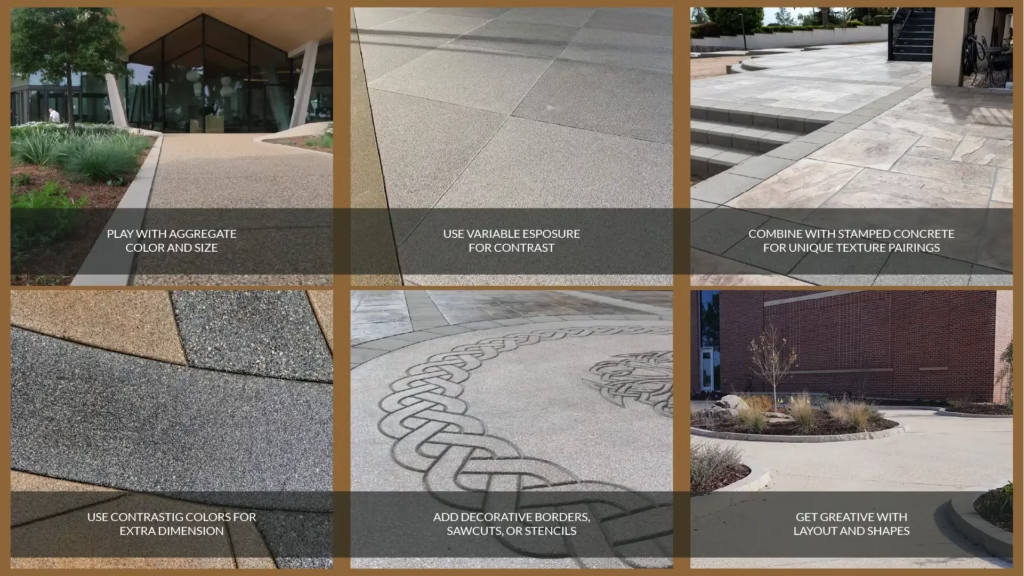
To truly elevate an outdoor space, you have to look beyond just “pouring a slab.” Whether you’re aiming for a modern, sleek aesthetic or a warm, traditional feel, the design phase is where your property’s personality comes to life. According to Brickform, the key to a “next-level” finish is moving away from a one-size-fits-all approach and instead using techniques like variable exposure and contrasting borders to create depth.
In the Charlotte area, where there is a mix of historic brick houses and new homes that adhere to the current building trends, the aggregate concrete and colour you choose will determine whether the driveway disappears in your surroundings or becomes the main focus of your street appeal.
Referring to US Brick, current exterior trends are shifting toward warm, grounded tones like creams and sandy neutrals, which pair beautifully with the natural textures of exposed stone.
Feature | Option | Impact & Best Use |
Texture | Sand Finish | A light exposure that feels like fine sandpaper. Perfect for a modern, “barefoot-friendly” pool deck. |
| Standard Aggregate | Revealing larger river pebbles or granite. Provides maximum grip and a rugged, natural look for driveways. |
Color | Integral Color | The pigment is mixed into the wet concrete. This ensures the color stays consistent even if the surface is chipped. |
| Surface Staining | Applied after the concrete sets. Ideal for creating a “mottled” or antique look that mimics natural stone. |
Pattern | Decorative Borders | Using a different stone or a smooth “picture frame” edge to define the space. |
| Hybrid Stamping | Combining exposed aggregate in the center with a stamped brick or slate border for a high-end, custom feel. |
Top Exposed Aggregate Patio Designs and Patterns
In the Queen City, homeowners are moving away from the “standard gray slab” to create their backyards like an expansion of their home. Their objective by 2026 is to develop “Outdoor Living Rooms” with comfortable, intentional, high-quality spaces.
The most commonly desired look in home subdivisions, such as South Park, is the “Picture Frame” border. This code includes pouring a coarse, rustic, exposed aggregate inside an outline, but a smooth, level (12″) side all around in a little darker color than the inside of the frame. As per The Concrete Network, this creates an area rug-type boundary around the patio that makes it appear architectural and much more expensive than it actually is.
Modern patterns and geometric layouts
If you’re looking for a cleaner, more contemporary vibe, Large Format Pavers are the way to go. Instead of one continuous pour, we create oversized “stepping stones” (often 36″ by 36″) with thin gaps in between. Referring to design trends from Unilock , filling those gaps with fine river stone or even low-growth moss creates a “biophilic” design that helps with Charlotte’s heavy rain runoff while staying much cooler under the July sun than a solid sheet of concrete.
For those who want a bit of flair without the maintenance of real wood, Hybrid Textures are surging in popularity. We’re seeing a lot of homeowners combine a “sand-finish” aggregate—which feels soft like fine sandpaper on bare feet—with a stamped “wood plank” border. This gives you the warmth of a deck with the “set it and forget it” durability of residential concrete.
How much does exposed aggregate concrete cost in Charlotte?
What factors influence the price of exposed aggregate concrete driveways and patios?
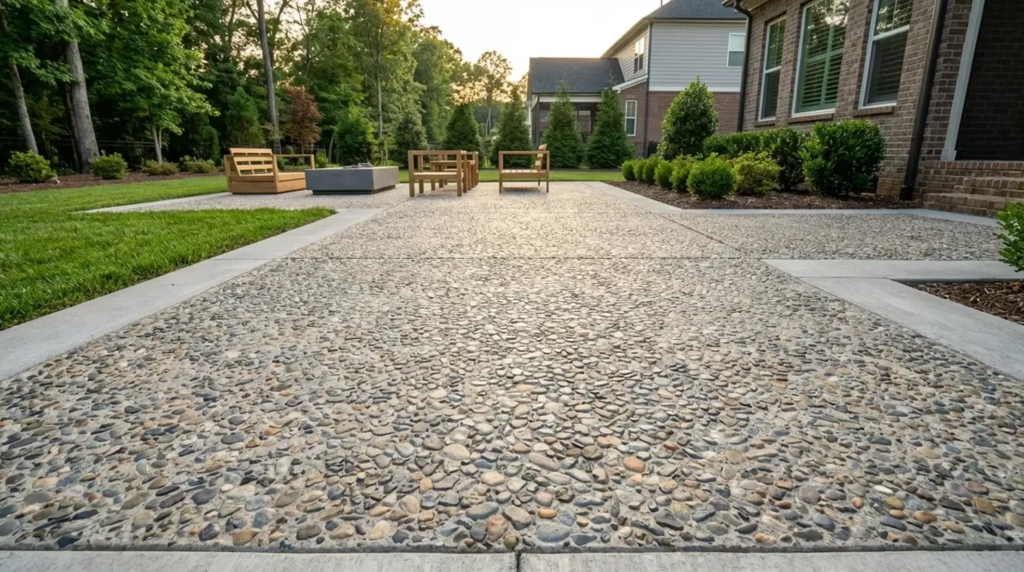
Budgeting for residential concrete isn’t just about the square footage; it’s about the details of your specific lot and design goals. According to HomeGuide, labor and materials are roughly an even split, but several local factors can shift those numbers:
- Site Preparation and the ‘Red Clay’ Factor: The soil in Charlotte is extremely dense and must be thoroughly compacted to avoid settling issues after installation. If your yard has a steep slope or needs a significant amount of grading to accommodate the heavy rainfall that North Carolina receives, prep costs will add an additional $1 to $3 per sq. ft. to your project.
- Aggregate Rarity: Utilizing locally sourced river rock or crushed granite is a cost-effective option for exposed aggregate concrete; however, if you’d like to use specialty handicraft aggregates such as tumbled sea glass, black basalt and white quartz, your material costs will definitely be higher. According to The Concrete Network, specialty stones are typically sold by the ton, and their prices can vary due to seasonal availability.
- Reinforcement Requirements: For asphalt-based driveways that will support heavy SUVs or trucks, we recommend installing a slab that consists of a minimum 6″ thickness with reinforced rebar. Based on information provided by Angi, the increase in thickness from a normal 4″ to a 6″ slab adds approximately 20% to 25% to your total material cost.
- Sealer Quality: In North Carolina’s humid climate, a high-quality UV-resistant sealer is critical for preventing your exposed aggregate concrete stones from “popping” out during a winter freeze; for this reason, we use premium-quality sealers exclusively. Premium sealers are available in both wet and dry finishes; while wet finish topical sealers provide the “wet-look” effect to your exposed aggregate, they will need to be reapplied every few years.
Charlotte pricing comparison on decorative concrete
Service Type | Estimated Cost (Per Sq. Ft.) | Best For |
Basic Broom Finish | $6 – $10 | Side walkways and utility pads. |
Exposed Aggregate | $10 – $18 | Driveways, pool decks, and high-traffic patios. |
Stamped Concrete | $12 – $25 | Decorative patios looking to mimic wood or slate. |
Concrete Resurfacing | $5 – $12 | Reviving an existing slab without a full tear-out. |
FAQ's
Both types of concrete are considered mid-range; however, exposed aggregate concrete can cost between $10 and $18 per square foot, while a complex stamped concrete design can go as high as $25 per square foot.
A surface retarder is a liquid solution that we apply on the new concrete surface to extend the time it takes for the top (skin) of the concrete to set up. This gives us time to remove/clean the thin layer of cement paste from the top of the slab (skin) after a few hours exposing the beautiful exposed aggregate concrete below without negatively affecting the integrity of the rest of the slab.