

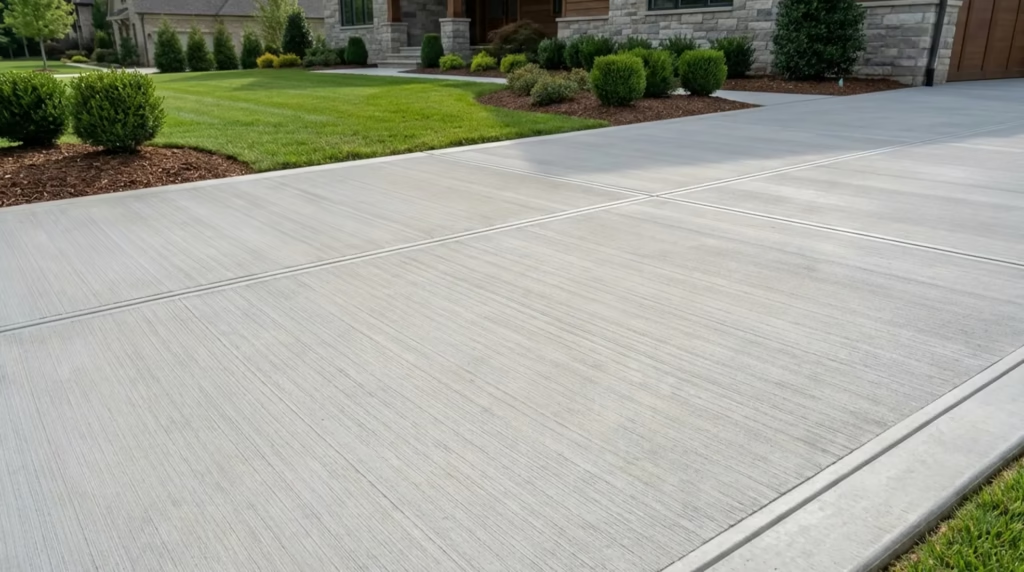
What is broom finish concrete and how does it enhance surface texture?
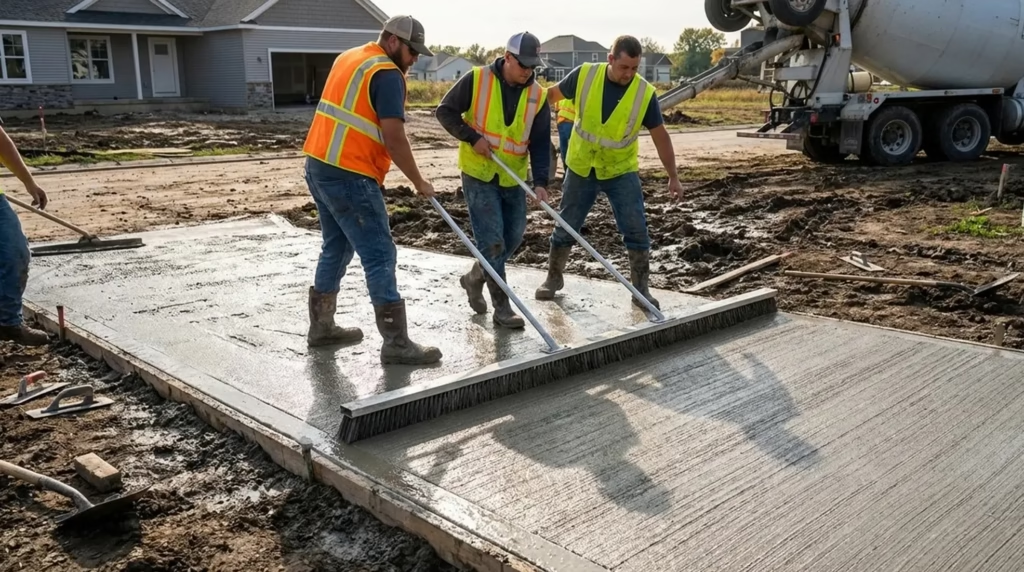
Broom finish on concrete is a type of textured surface created by dragging a professional concrete broom over the surface of a freshly poured and leveled slab. This technique produces shallow, uniform ridges on the surface of the concrete, which increases the surface area and friction of the concrete. The broom concrete finish can also be applied over a concrete leveler — a broom finish on concrete leveler works the same way as on a standard pour, provided the leveler has reached the right stage of set before the broom is pulled.
Because of this, the slab has a lot of slip resistance, which is very important in outdoor areas that tend to get wet/humid or have water splashed from pools. Homeowners can be assured that the “drag” is applied at the right point in the curing process by employing a professional concrete contractor (not too wet, which will produce sloppy, messy puddles; nor too dry, which will produce a weakly linear line). In addition to safety, broom concrete is used extensively in decorative concrete for its clean, directional appearance that leads one’s eye to a house’s architectural features.
Key characteristics of broom finish concrete
It is essential to be aware of the qualities that make a broom finish the standard in the concrete industry for both residential and commercial flooring.
- Enhanced Traction: One of the most important characteristics of a broom finish is the fact that it has natural traction through the micro-channels created by the ridges. Water flows through these micro-channels enabling the surface to have “barefoot friendly” yet non-slip capabilities underfoot.
- Aesthetic Versatility: While a standard broom finish concrete texture is a classic light grey color, decorative concrete specialists can enhance the look by using integral pigments to add color to the concrete or by adding decorative borders. The depth of the broom texture can also be adjusted — a fine broom finish concrete produces subtle, shallow lines suited to patios and walkways, while a medium broom finish creates deeper ridges for driveways and surfaces that see heavier traffic or wetter conditions.
- Structural Durability: Broom finishing is a mechanical method of finishing concrete, as it creates an integrated part of the monolithic pour. Broom concrete is naturally resistant to freeze-thaw cycles that occur in many climates.
- Reflective Quality: The fine lines of the broom finish help to break up sunlight, significantly reducing glare when compared to smooth-troweled outdoor slabs.
Key Benefits and Popular Uses of Broom Finish Concrete
Broom finish on concrete is an excellent choice for many homeowners, as it offers several important benefits. The National Ready Mixed Concrete Association states that all exterior slabs are required to have a slope so that water can drain away and that they are finished in such a way that when wet, the texture remains non-slip in order to meet the standards of safety for outdoor flatwork. Benefits of broom finish concrete include:
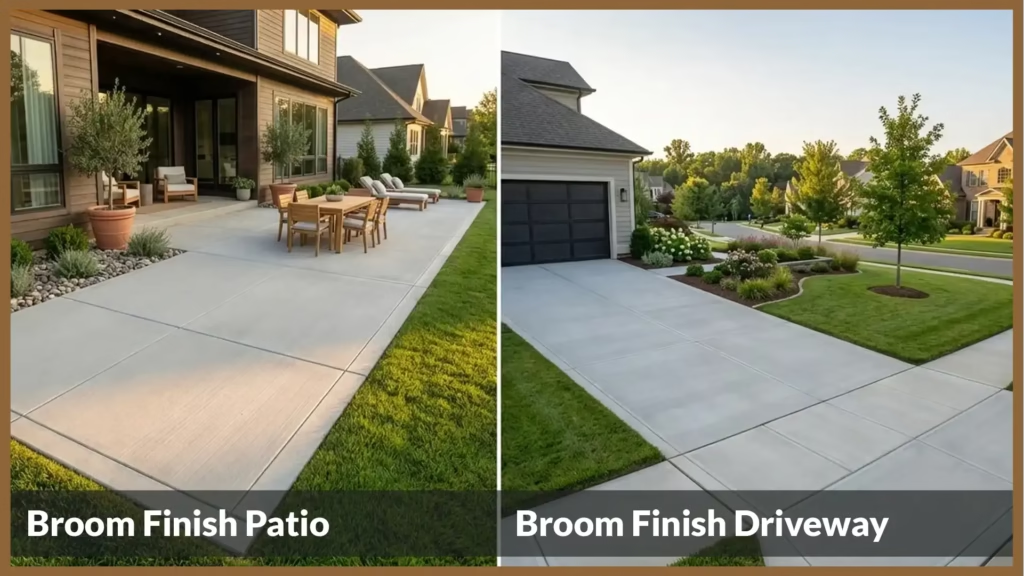
- Cost-Effectiveness: Broom finish concrete is generally less expensive than most other types of decorative concretes. A broom concrete finish creates an economical choice when selecting materials for large projects while preserving the structural integrity of the concrete. It minimizes the use of high-cost materials and requires very little in the way of special tools.
- Non-Slip Texture: The broom finish concrete texture created when broom finishing provides an added means of safety due to the higher mechanical friction the textured surface provides. As per The Concrete Network, it is important to apply the broom finish when the concrete has not yet set. Proper application will create a durable, high-traction grit on the surface of the concrete, which is absolutely necessary to prevent slipping in high-moisture environments.
- Versatile Uses: The broom concrete finish can be utilized in many different residential and commercial applications (e.g., driveways, sidewalks, pool decks, etc.) where utility and safety are the two most important factors to consider.
Why choose broom finish for non-slip concrete surfaces?
How is broom finish concrete applied? Step-by-Step Process
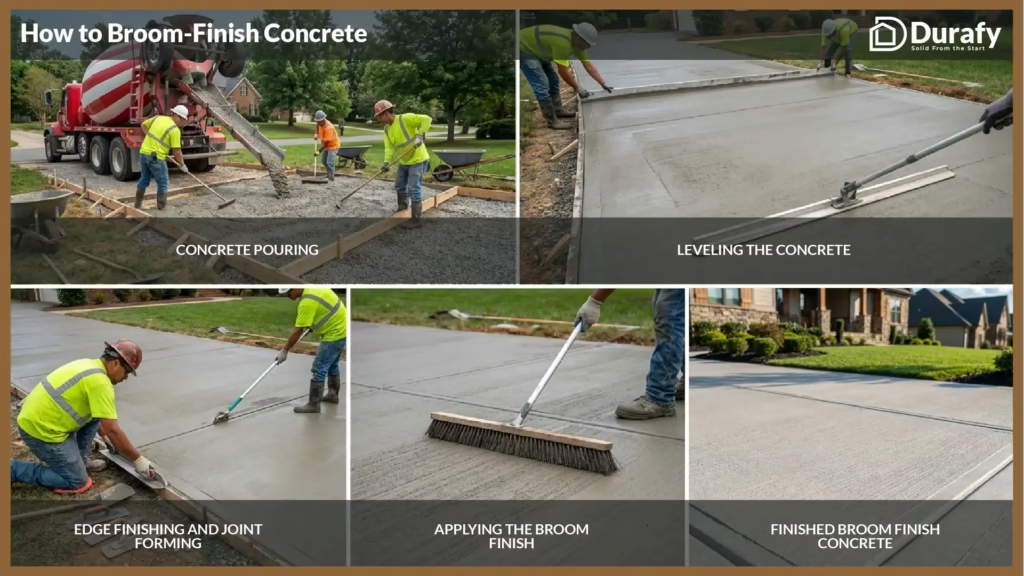
The application of broom finish concrete requires a blend of technical precision and artistic timing. To ensure the slab remains structurally sound while providing maximum traction, professional installers follow a rigorous workflow:
- Site Preparation: Clearing the site to remove all debris, excavation (4 – 6 inches for residential uses), and grading to achieve proper drainage are all necessary elements of the site preparation phase. Part of this requires providing a properly compacted subgrade (usually a combination of stone) so that your floor does not settle after installation.
- Forming and Reinforcement: Wooden forms define the perimeter, while rebar or wire mesh is integrated to provide the tensile strength necessary to withstand vehicle loads and temperature shifts.
- The Pour & Striking Off: After the concrete has been poured into the forms, a screed board is used to level the surface of the concrete. As the Concrete Network states, this leveling procedure must be done immediately to prevent water (called bleed water) from rising up through the concrete surface and losing the integrity of the top layer of the slab.
- Bull Floating: A float called a bull float is used to press down larger aggregates so they can be buried and then redelivered via the use of “cream” (the fine portion of cement within the slurry mixture). Once all of these steps have been completed, the concrete is “touch” dry enough that a broom can be used to brush the surface to give it an attractive finished appearance.
- The Brooming Technique: Once the concrete has partially set — passing the “finger test” where an imprint is barely visible — a specialized concrete broom is pulled across the slab. This must be done in straight, continuous strokes to avoid crooked lines or “boogers” (clumps of displaced sand).
Pro tips for a perfect broom finish concrete
Getting a uniform broomed concrete finish across a large driveway or patio isn’t just about luck — it’s a mark of true craftsmanship. To make sure your concrete looks as good as it performs, here are the “golden rules” our experts live by:
- Timing is Everything: Think of this like baking. If you broom too early while the concrete is still “soupy,” the ridges will just collapse back into the water. If you wait too long and it’s too hard, the broom won’t bite, leaving you with a weak, shallow texture that fades after just one winter. The “sweet spot” is when the concrete is firm enough to hold its shape but still workable.
- Keep Your Tools Clean: It sounds simple, but it’s a game-changer. After every two or three passes, rinse the broom in a bucket of clean water. According to Concrete Decor, skipping this step allows “cream” (the fine cement paste) to build up on the bristles, which can leave your surface looking ragged and messy instead of crisp and clean.
- Plan Your “Path”: For driveways and sloped walkways, typically run the ridges perpendicular to the slope. This provides the best possible grip for your shoes (and your tires) on rainy days.
- Respect the Sun: Here in Charlotte, the weather plays a huge role in how concrete behaves. A slab sitting in the direct July sun will set much faster than a section in the shade of your house. A great concrete contractor is constantly “reading” the concrete and adjusting their pace so the texture looks identical from one end to the other.
Ready to Upgrade Your Outdoor Space? Trust Durafy.
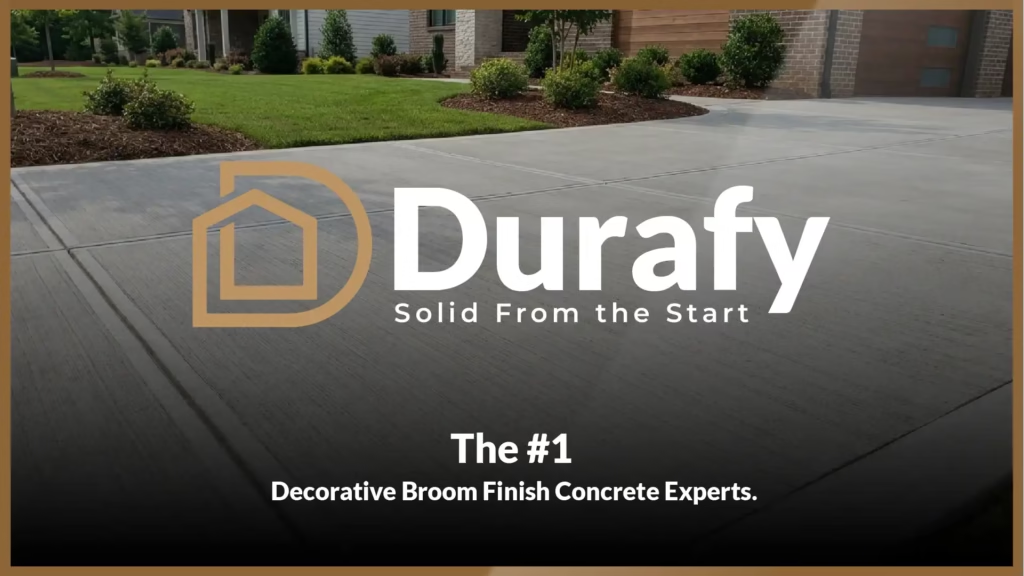
Choosing the right finish is only half the battle; the other half is choosing a partner who understands the nuances of the North Carolina climate. At Durafy, we specialize in high-performance decorative concrete and textured concrete solutions that stand the test of time.
Whether you are looking for a classic broom finish driveway or a custom-colored patio, our team provides transparent quotes and expert execution from the first pour to the final seal. Don’t settle for a “standard” slab — invest in a surface that combines safety, durability, and curb appeal.
FAQ’S Key Benefits and Popular Uses of Broom Finish Concrete
The bull float presses down larger aggregates and brings the "cream" to the surface, creating the smooth, fine canvas required for a clean, professional-looking broom finish on concrete.