

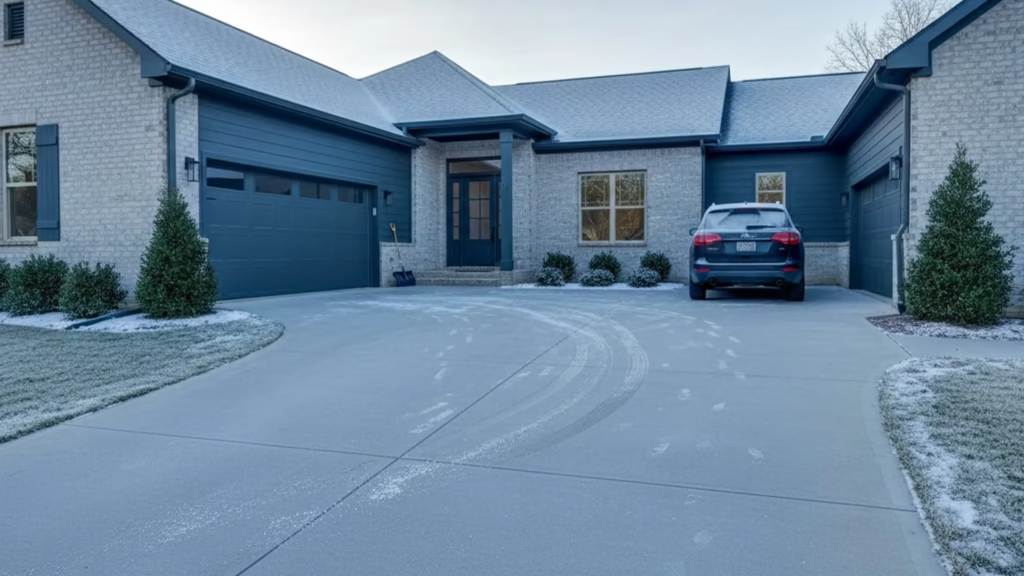
If you’re searching for stamped concrete Charlotte, you’re likely looking for a way to upgrade your home’s curb appeal without the premium price tag of natural stone. In the Queen City, stamped concrete is the go-to solution for patios and driveways because it provides the high-end look of slate or hand-laid brick while remaining durable enough to withstand North Carolina’s heavy summer rains and humidity. Unlike pavers, which often shift in our local red clay soil, a professionally installed stamped concrete patio in Charlotte offers a seamless, weed-free surface that stays level for decades.
Below, you’ll find the essential details every Charlotte homeowner needs: from local stamped concrete price per square foot and the most popular patterns, to specific maintenance tips for keeping your decorative concrete vibrant in the Carolina sun.
Concrete vs Asphalt Driveways: Which Lasts Longer in Winter?
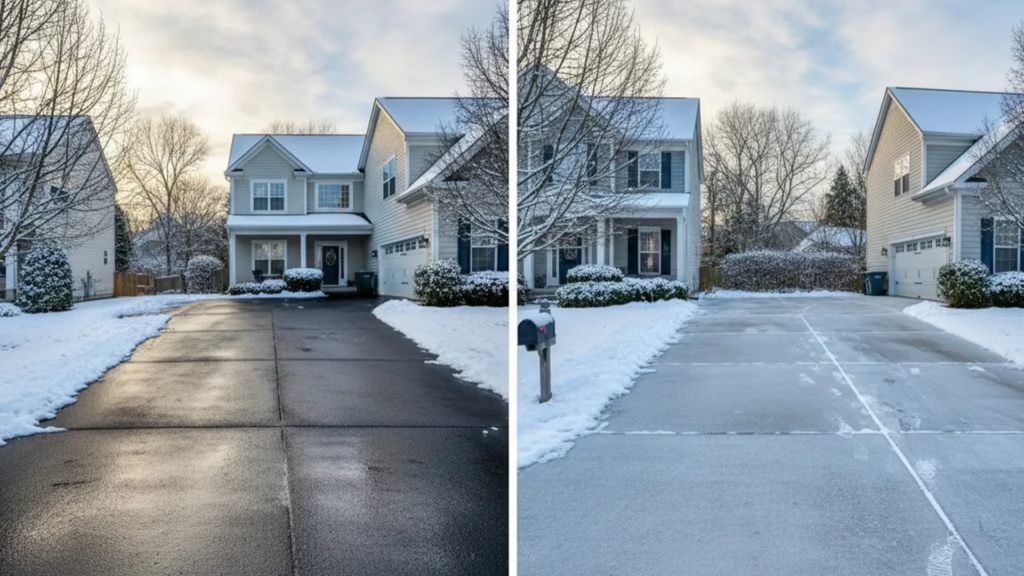
When you select stamped concrete Charlotte to create an outdoor living area for your home, you’ll realize that this type of decorative concrete provides several benefits over other options available in the market today, especially because Charlotte stamped concrete is designed to last for years.
In addition to its durability, stamped concrete Charlotte provides a continuous and level surface, so you can avoid the usual problems homeowners have when using individual paver stones (i.e.; shifting due to heavy rains or weeding during the humid weather conditions).
According to local and industry experts, the primary benefits include:
- Cost-Efficiency: On average, the stamped concrete price per square foot runs between $12 and $18, which is significantly more affordable than the $25–$40 per square foot typically required for natural stone or high-end pavers.
- Climate Resilience: Unlike wood decks that rot or pavers that settle in North Carolina’s red clay, professionally sealed concrete is designed to withstand the “freeze-thaw” cycles and intense UV exposure common in the Charlotte area.
- Low Maintenance: Decorative concrete patio Charlotte installations require only basic cleaning and a fresh coat of sealant every 2–3 years to maintain their luster and moisture resistance, making them ideal for busy households.
By working with specialized decorative concrete Charlotte contractors, you can customize your project with advanced textures like Ashlar Slate or Roman Cobblestone, achieving a luxury aesthetic that boosts your home’s curb appeal and resale value without the high-end price tag.
Which stamped concrete designs are popular in Charlotte?
Home Improvements are on the rise across the Queen City, with many homeowners creating larger outdoor living areas, i.e., outdoor rooms. In particular, homeowners throughout the Charlotte NC area are creating stunning multi-level stamped concrete patios adorned with built-in seating walls, fire pits, and other amenities such as outdoor kitchens.
Popular concrete stamping patterns and colors
Selecting a pattern can be based on a variety of factors, such as the architecture of your house and the area you are surfacing.
Here are the top 3 patterns selected by local market trends among Charlotte concrete designs for 2026:
- Ashlar Slate: Irregular rectangles that create a sophisticated, hand-hewn stone look.
- Best for Patios & Pool Decks: Its relatively flat surface is comfortable for bare feet and provides a stable base for patio furniture.
- European Cobblestone: Offers a rustic, old-world charm with rounded edges.
- Best for Driveways: The deep texture provides superior traction during heavy North Carolina rainstorms and helps mask tire marks better than smooth surfaces.
- Wood Plank: Replicates the texture and grain of authentic timber, often in weathered gray or espresso.
- Best for Pool Decks: It provides the “boardwalk” aesthetic without the rot, splinters, or maintenance required by real wood in Charlotte’s humidity.
- Herringbone Brick: A classic zigzag layout that adds structure and timeless appeal.
- Best for Walkways & Entryways: It complements the traditional architecture found in Charlotte neighborhoods like Dilworth and Myers Park.
Concrete sealer: Essential Protection
Applying a high quality concrete sealer is an important part of preserving the detailed textures of the surface as well as protecting them from fading under the harsh sunlight of the Carolina sun or getting stained by the red clay. The UV-resistant and stain-resistant property of a quality concrete sealer acts as a barrier to protect the bright colours of the surface, such as “Charcoal” and “Terra Cotta”, from fading and will also block oil or clay from penetrating the surface.
According to Networx, homeowners should plan to reseal their surface every 2 to 3 years, in order to get the best protection possible for their home, since this schedule will prevent water from penetrating under the surface and causing scaling.
Why Choose Stamped Concrete for Your Charlotte Patio & Driveway?
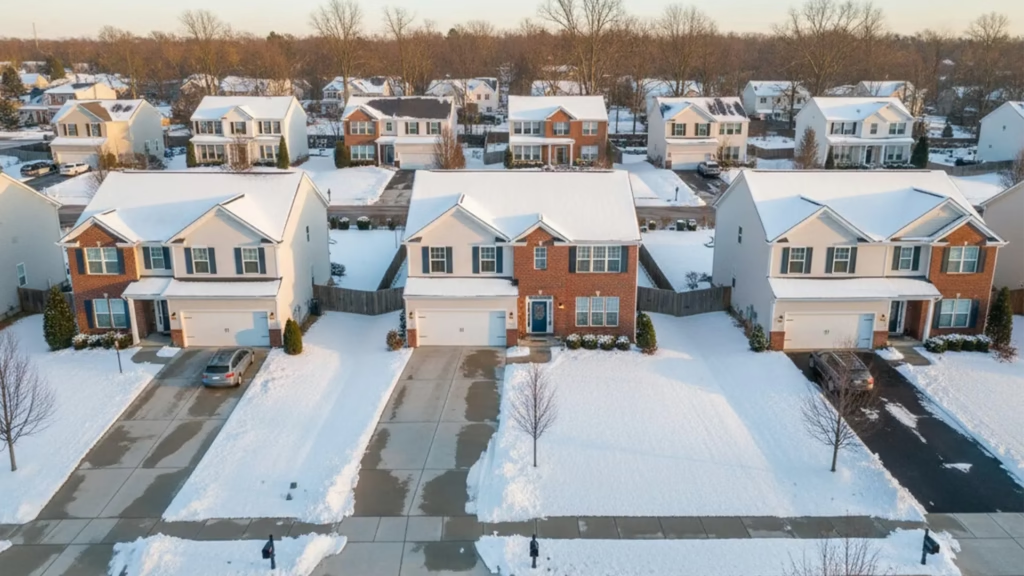
Custom driveways are one of the best ways to improve your home’s curb appeal. Homeowners across the Charlotte area are turning from basic asphalt to decorative concrete that looks like high-end stone but can withstand heavy loads from SUVs and trucks. The current trend in Charlotte concrete designs for driveways is “Sleek Minimalism,” using neutral colors like charcoal and light grey along with textured finishes for a high-end appearance that complements your home.
Popular design ideas that are functional and beautiful for concrete patio Charlotte NC homes and driveways include the following:
- Curved layouts with natural contours: Many people want an expertly designed landscape, yet do not know that driveway designs can also play this role. Curved driveways add an extraordinary level of elegance to your home’s exterior. Begin by selecting a stamped concrete pattern — such as European Fan or London Cobble — that aesthetically follows the curves of your driveway while hiding minor expansion joints caused by our soft red clay soil.
- Border designs of contrasting colors and/or patterns: This enhances and defines your driveway area by creating visual interest between two areas of your driveway (edge of driveway and surrounding areas). For example, combining a main driveway made from Seamless Stone with edging made from dark charcoaled brick creates an elegant framed appearance that will draw the eye toward your home’s entrance.
- Integrated LED lighting: By incorporating LED lights into your driveway border and/or adjacent retaining walls, you can make your driveway both beautiful and safe.
Color options for decorative concrete in Charlotte
When it comes to completing your next home improvement job, you should consider layering colours as part of achieving this perfect look. Decorative concrete typically uses the “base and accent” colour system. This entails introducing integral pigments to your wet concrete for an even colour foundation and then utilising a surface colour hardener/release agent in order to accentuate how your stamp has been textured.
According to the Portland Cement Association (PCA), using color hardeners does more than just provide vibrant hues; it significantly increases the surface density and wear resistance of the slab, making it less permeable to moisture and de-icing chemicals.
Common color palettes for stamped concrete Charlotte NC projects include:
- Charcoal and Slate Grey: These colours are very popular for contemporary-style homes in areas such as the South End because of their resemblance to bluestone; therefore, they provide a very upscale look with a clean aesthetic.
- Earthy Browns and Warm Tones: The earth tone colours such as “Walnut” or “Sandstone” are also very popular and are great at hiding the Charlotte-based red clay ground that is so common throughout this area.
- Tan and Buff: These types of colours tend to be very good choices for pool deck applications because they do not retain heat when exposed to the sun as a result of their lightness.
- Terracotta and Rust Colours: Great choices for houses built in the Mediterranean style, or an excellent contrast to lay along a “brick” edge of either a driveway or walkway.
Stamped concrete installation Charlotte NC
Having the correct, precise timeline of stamped concrete installation Charlotte NC is key to having the success of your project. Due to the high humidity and expansive nature of the red clay in Charlotte, the installation of the concrete requires a precise manner to prevent surface scaling or premature cracking from occurring.
What steps are involved in preparing and pouring stamped concrete?
According to Venture Concrete, a professional installation follows a strict 10-step process or protocol to ensure the structural integrity and beauty of a concrete installation:
- Site Prep & Compaction of Subgrade: Removing all organic matter and compacting the soil beneath the slab, and then adding a gravel base where required, are critical steps in a concrete job in Charlotte.
- Forming & Reinforcing: The forms will determine the shape and location of the slab, while the use of either steel rebar or fiber reinforcing will provide the “skeleton” or framework to help stop any cracking from occurring in future years.
- Pouring & Screeding: Pouring the concrete and screeding/levelling it out will create a flat and level concrete surface.
- Colour & Stamping: Colour hardener is used just prior to stamping (placing heavy rubber mats to imprint should be done while concrete is still considered a “plastic” state).
- Curing & Detailing: After 24 hours, saw cuts of relief joints will be placed to provide control of the natural expansion of the concrete, and the surface will be thoroughly washed.
How much does stamped concrete cost in Charlotte?
Your number one priority when you’re planning an improvement to your home should be transparency of your budget. When it comes to stamped concrete price per square foot, homeowners can expect to pay between $12 and $22 per square foot for stamped concrete installation Charlotte NC during the year 2026.
The cost at the lower end of that range will be for straight lines and one colour, and the higher end will be for highly detailed designs that look like expensive, Italian slate tiles or hand-laid cobblestones.
Based on Networx, even though custom decorative designs can be as high as $28 per square foot when adding multiple colours, the returns on investment (ROI) of using decorative concrete will be much higher than if you used natural stone instead, which can easily be $40 or more per square foot.
Durafy costs for stamped concrete
At Durafy, we give transparent and fixed price estimates for any work we do on your property, based on the individual variables present at your site. Factors that influence your final investment price for professional decorative concrete patio Charlotte NC installation include:
- Design Complexity: In addition to square footage, number of accent colours, and custom borderwork, all affect the amount of labour needed to complete the installation. The more detailed the pattern, such as wood plank or cobblestone, the more exacting the work must be.
- Subgrade Integrity: Heavy, red clay found in Charlotte, NC shifts easily, as demonstrated by the many cracked concrete slabs around the city. Proper preparation of the site by excavating and compacting the gravel base is the only way to avoid the structural cracks that are common on “budget” installs.
- Commercial Grade Sealer: Each project receives a high solids, commercial grade concrete sealer applied to it. This becomes essential with the North Carolina climate as it is the only way to protect your surface from the harmful effects of UV light that cause fading of colour.
Our flexible financing options
We believe in making high end home improvements affordable for everyone. To allow you to get started on your project sooner, we have teamed up with a select network of partners to offer you modern financing options:
- Low-APR Monthly Plans: Competitive long-term rates that make a premium stamped concrete patio, pool deck or driveway as affordable as a monthly utility bill.
- No-Impact Pre-Approval: Through Acorn Finance, you can compare personalized loan offers from multiple lenders in 60 seconds with zero impact on your credit score, allowing you to choose the best terms for your budget.